


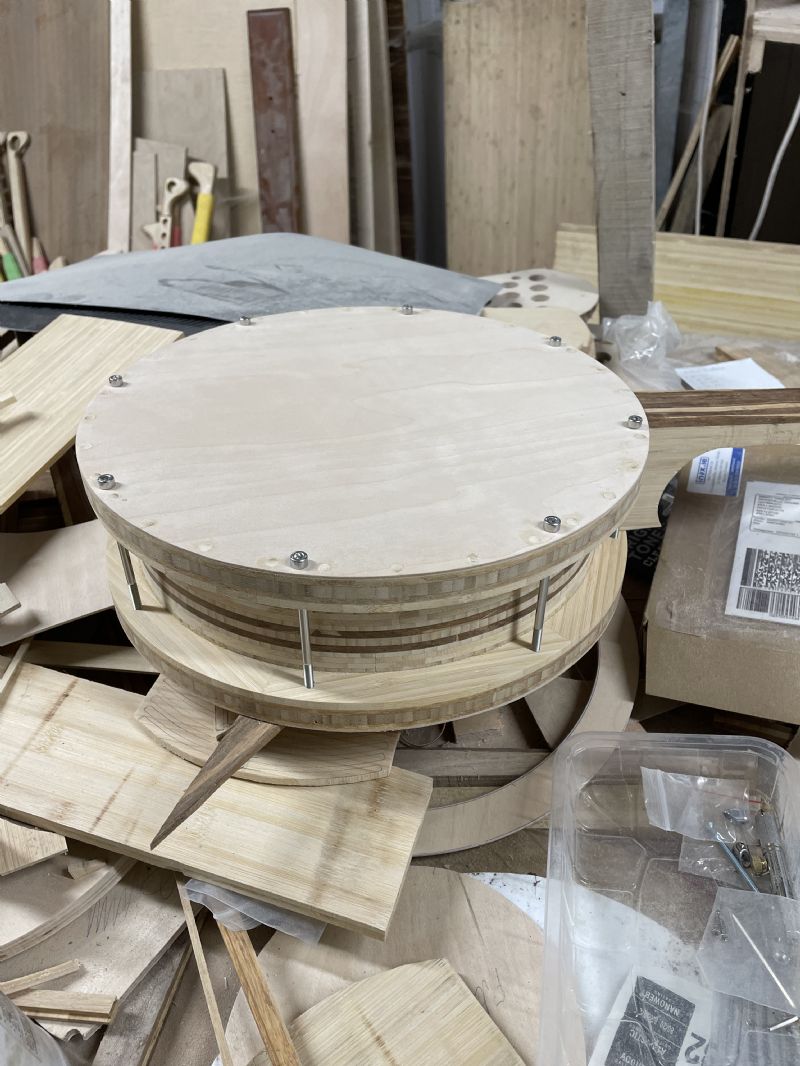
Here’s a pic of the bouzouki. The bolts on the violin are going to be different but the principle is the same.


Round works for mandolins too. I've heard one of these, and they really project in a session!
roundmandolins.com
quote:
Originally posted by The Violin BeautifulHere’s a banjo-viola made in Germany in the late 19th century. This one has skin on its top and back, but it’s still here to be seen in a museum.
metmuseum.org/art/collection/search/503754
I’ve seen a lot of novelty violins working in shops over the years.
I was sitting here imagining what the "brace" under the top plate looked like. No ordinary sound post or bass bar.
quote:
Originally posted by JonDRound works for mandolins too. I've heard one of these, and they really project in a session!
roundmandolins.com
Yes. This is a good example of working smart. The longer scale length also adds to tone and increases the volume (I do the same). He has put a banjo style resonator onto it to focus the sound. I wouldn't mind betting that he has put thicker sides on it as well. I haven't made a mandolin version yet even though I have two people asking. I'd like to see a head to head when the time comes around.
Th mandolin player next to me at a session last weekend had a round mandolin made with a wood top and body and banjo shape. I hadn’t seen one like it before. This one wasn’t especially loud, and it had a softer sound that blended more than a lot of other mandolins I’ve heard.
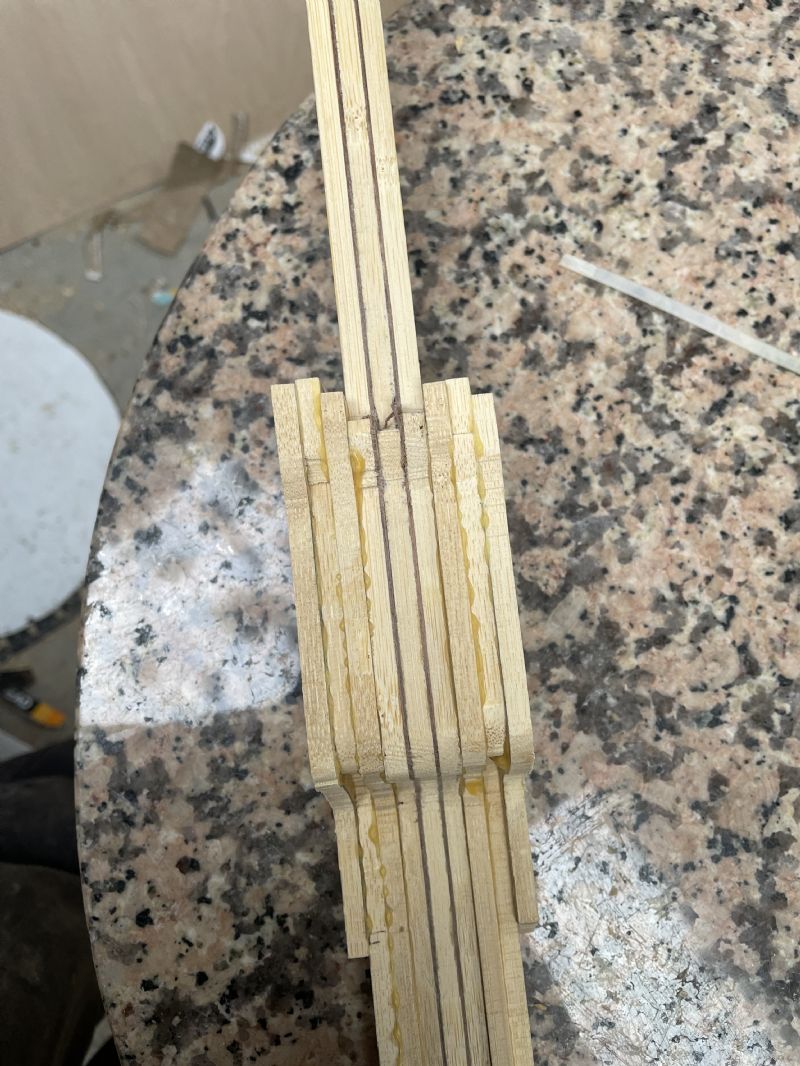
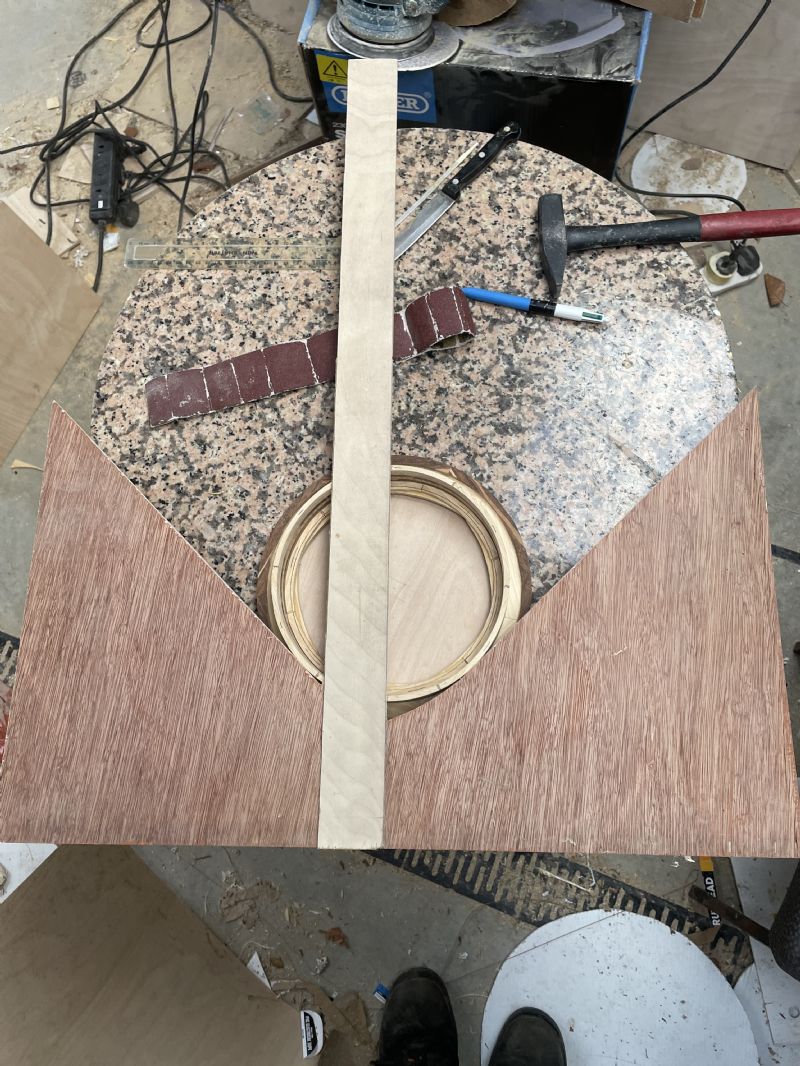
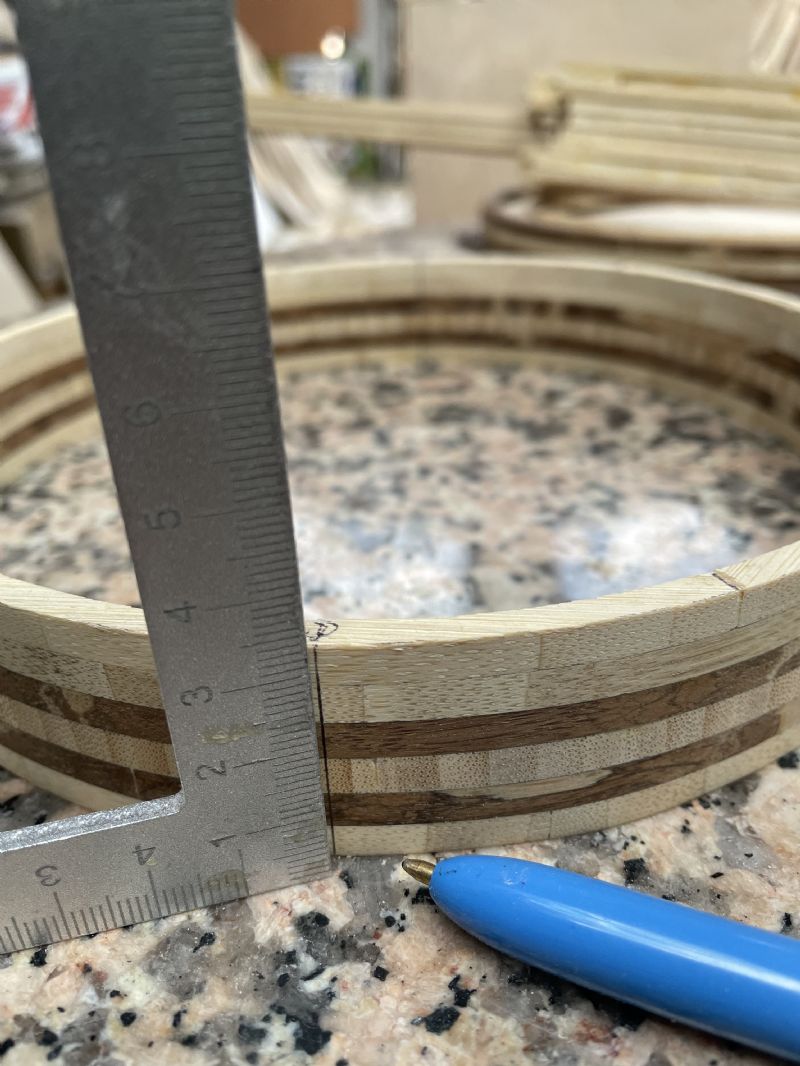
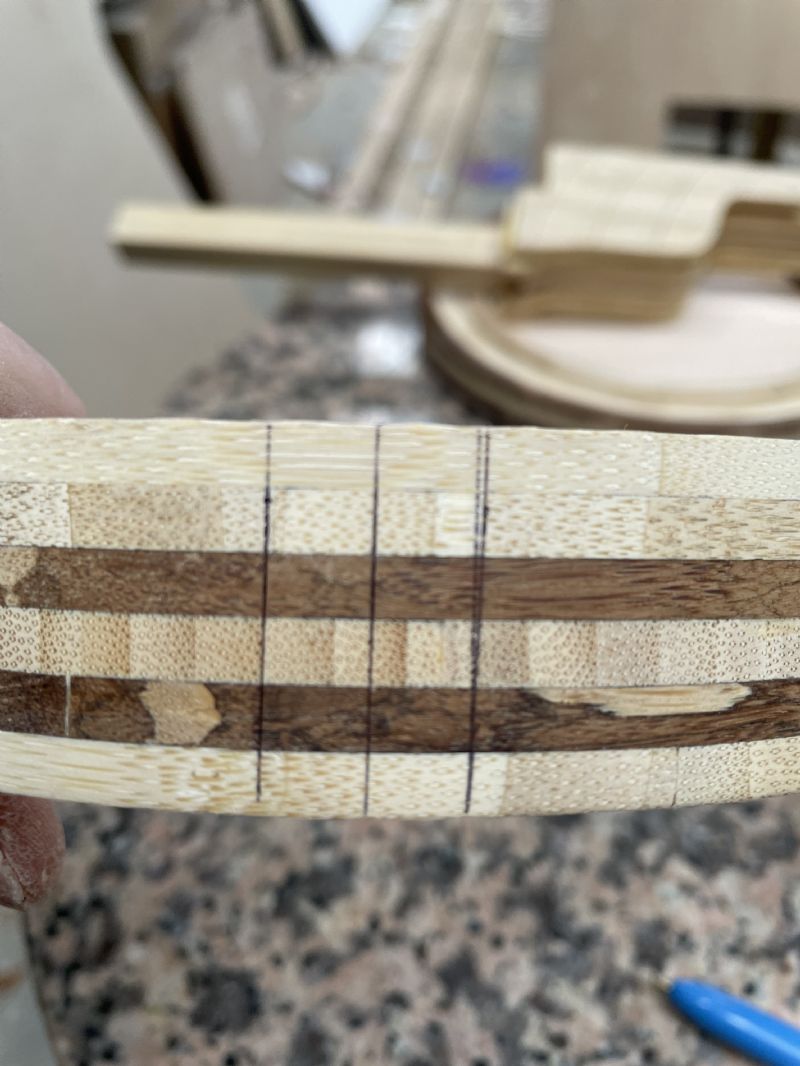
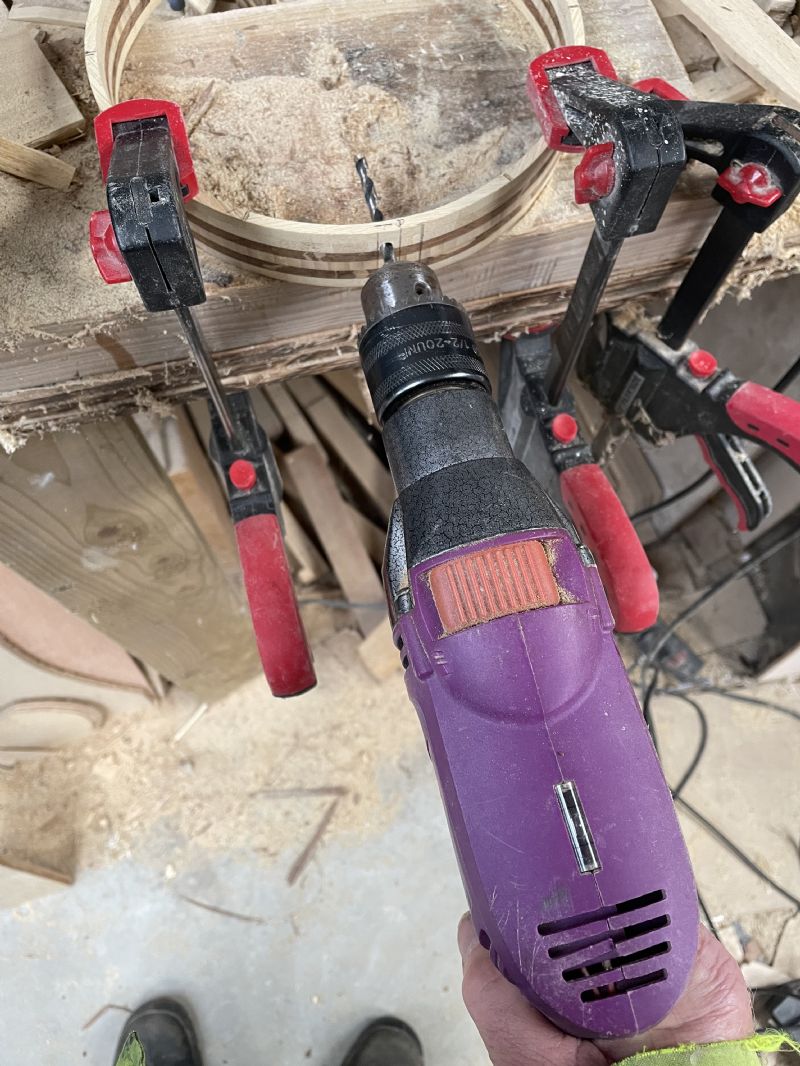
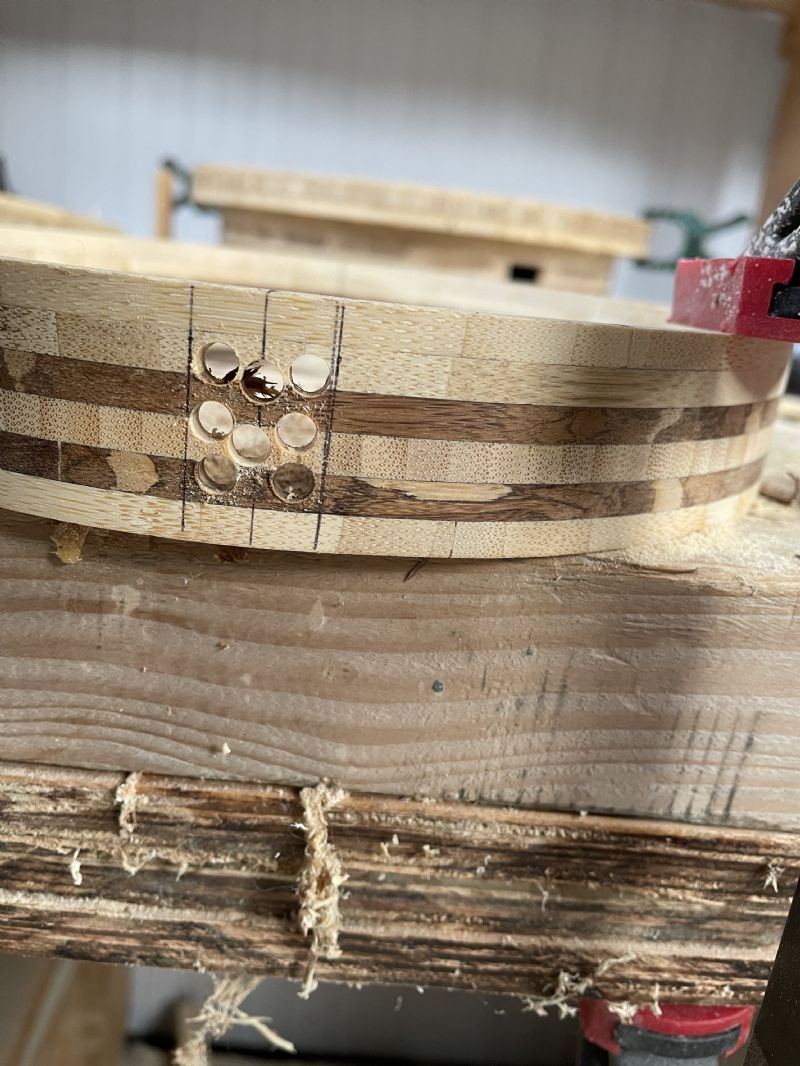
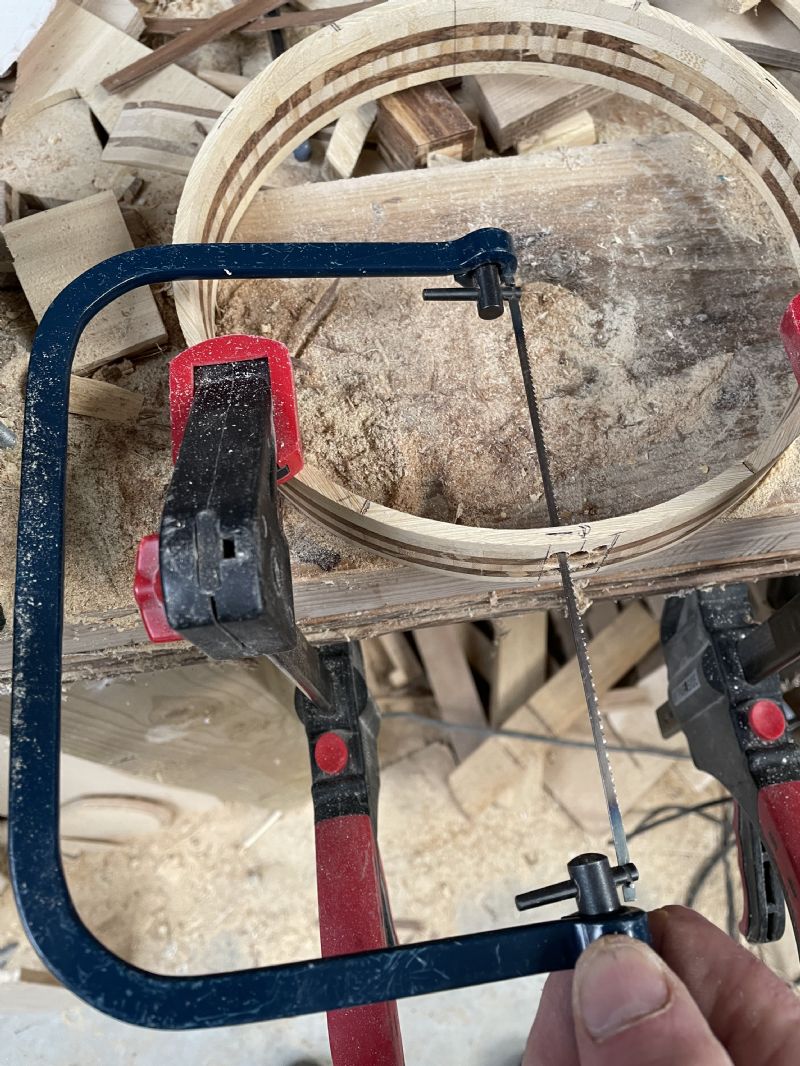
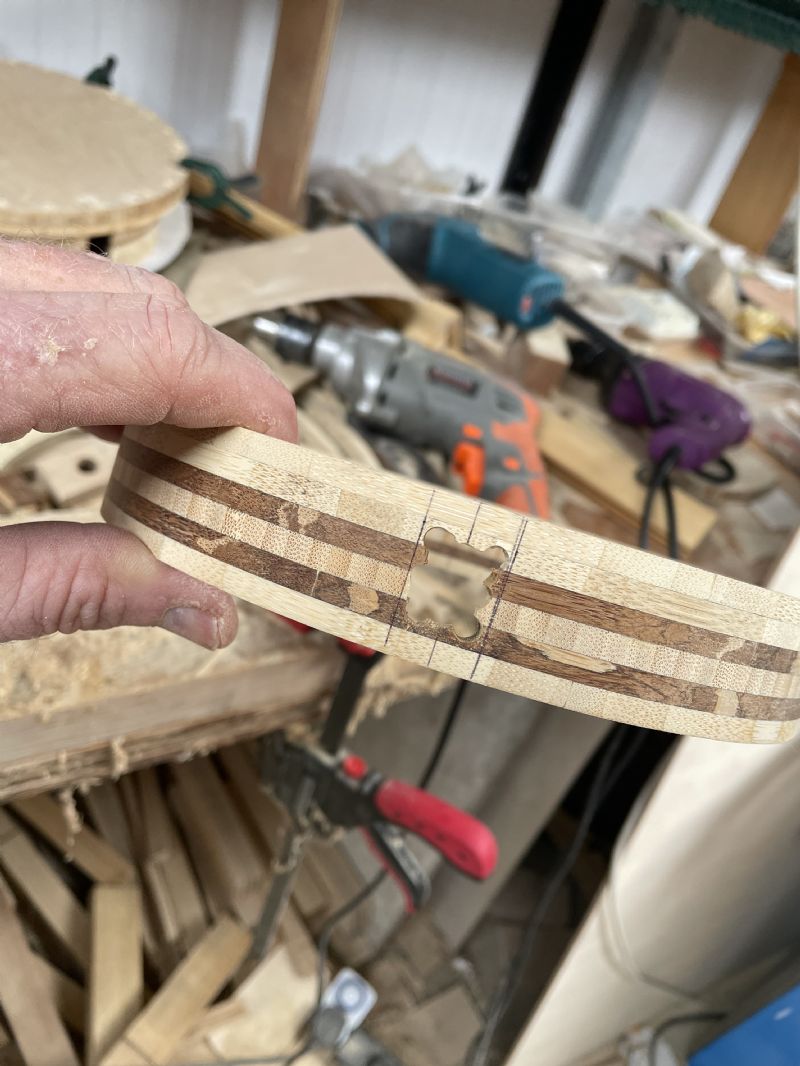
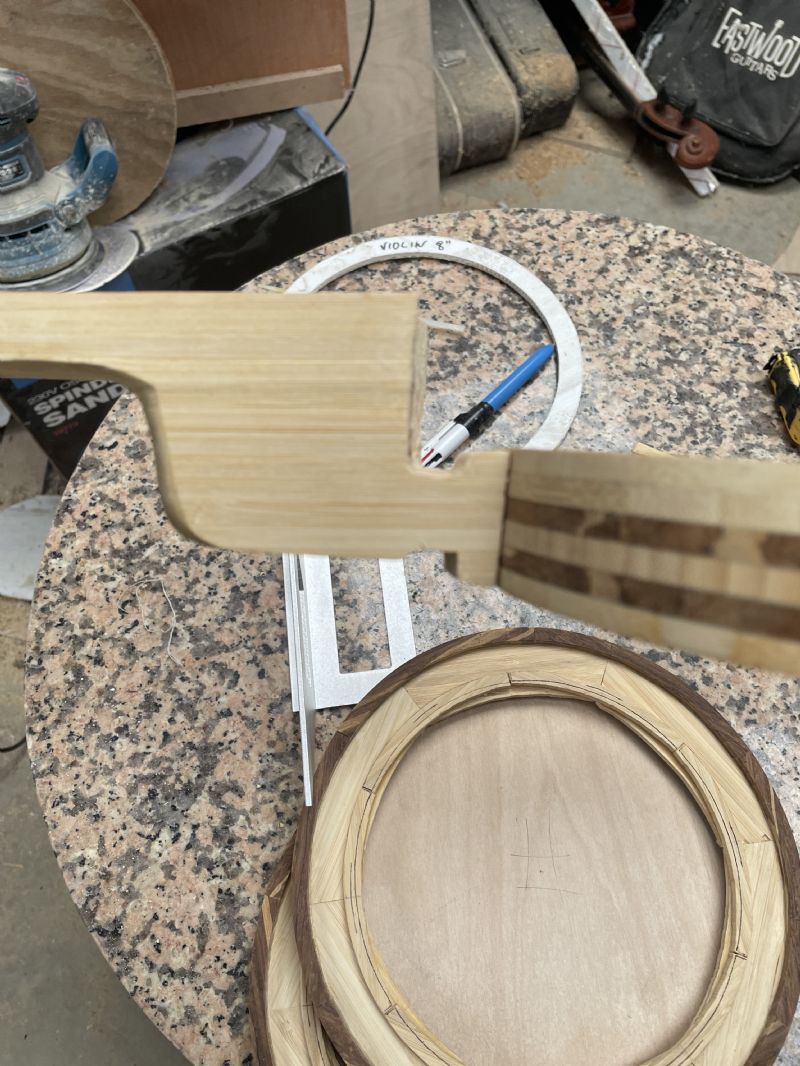
Today I worked on the bouzoukis as well as the violin. All the laminations are done. All eleven of them. This fiddle will survive rough treatment from the worst aircraft baggage handlers. I made up a contraption to mark the center line of the body and I made it big enough to work on the cello. Then marked the center line on the outside and inside face of the body with the width of the penetration. Drilled a series of holes for cutting out, I like this drill because it has a spirit level bubble on it. The scroll saw makes easy work of it. Then file to the final dimension. The neck is close to being snug. It’s important for it to have a good solid fit so I’ll finish it off tomorrow.
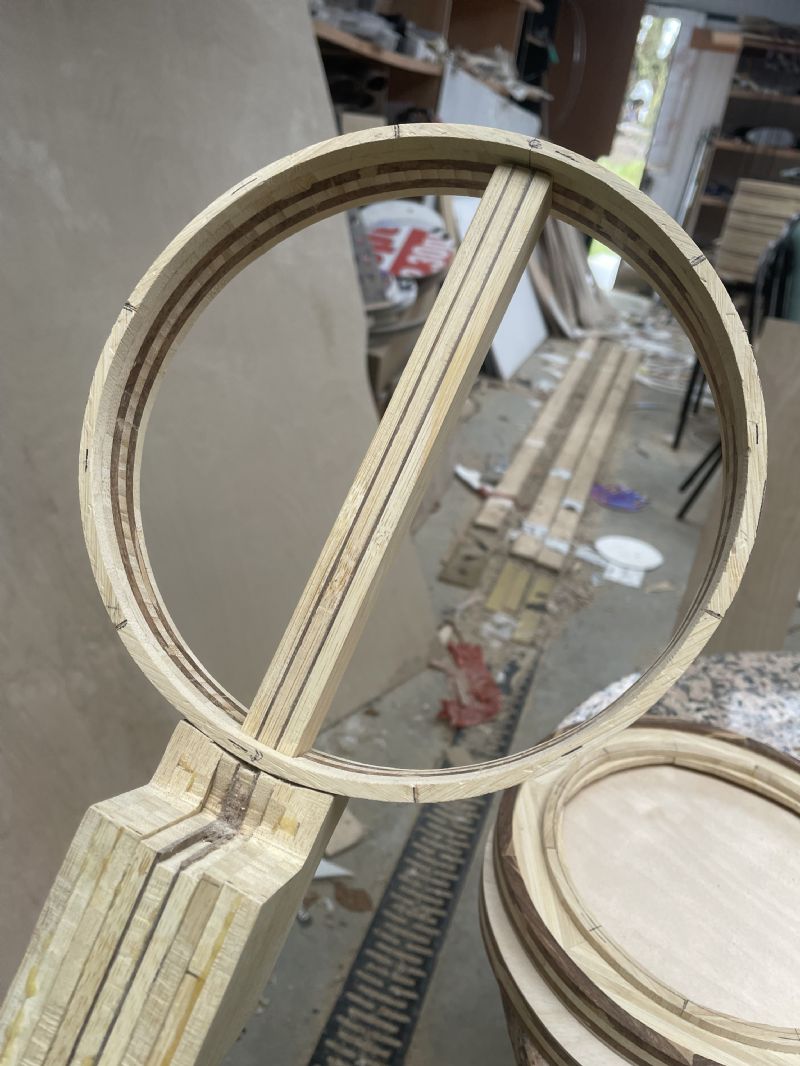
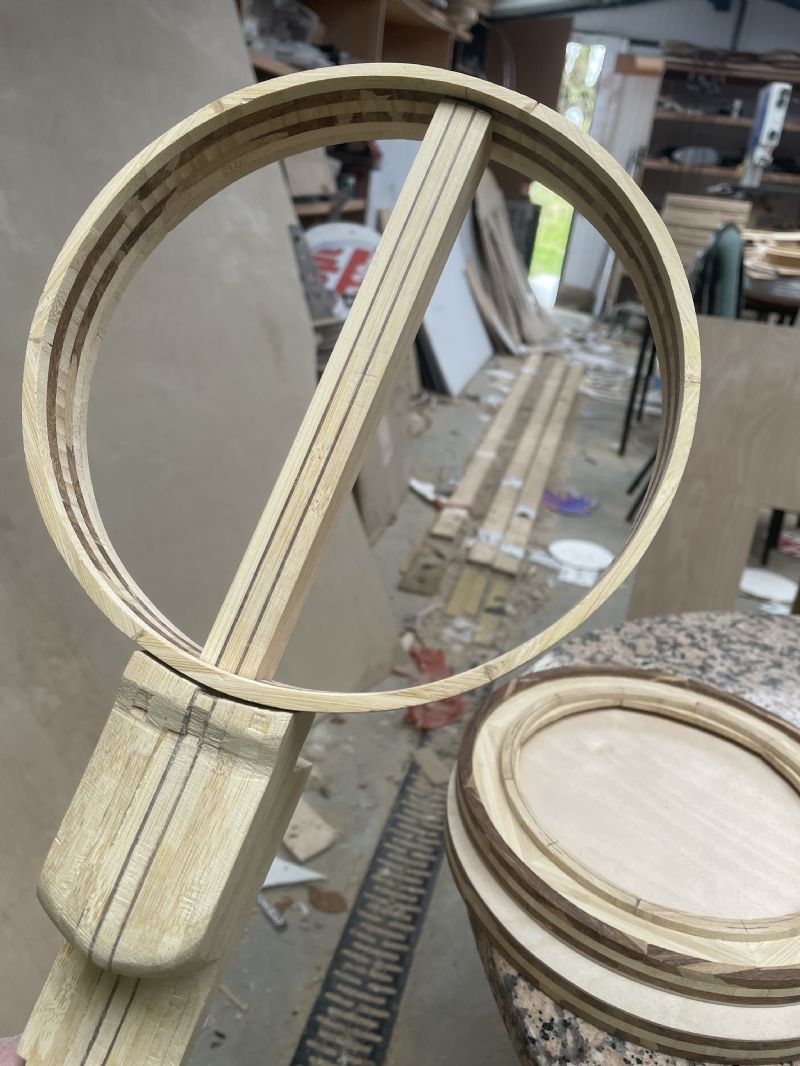
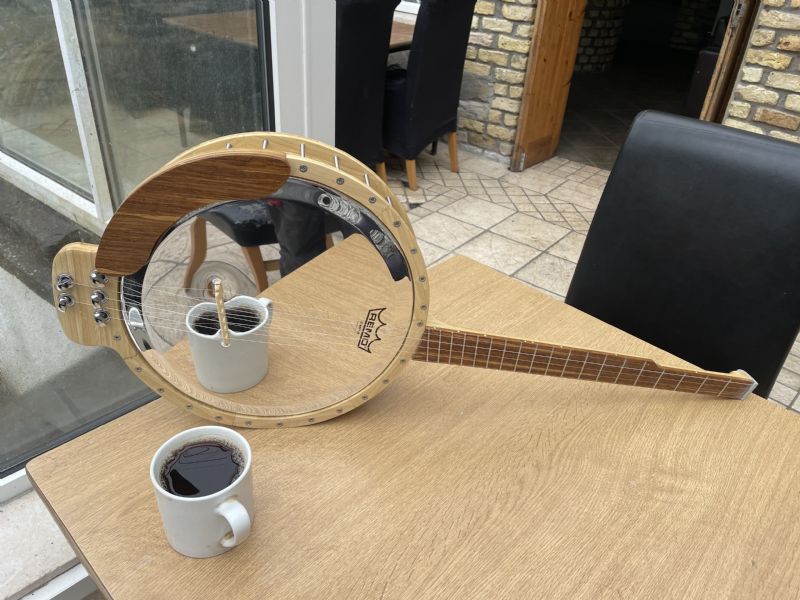
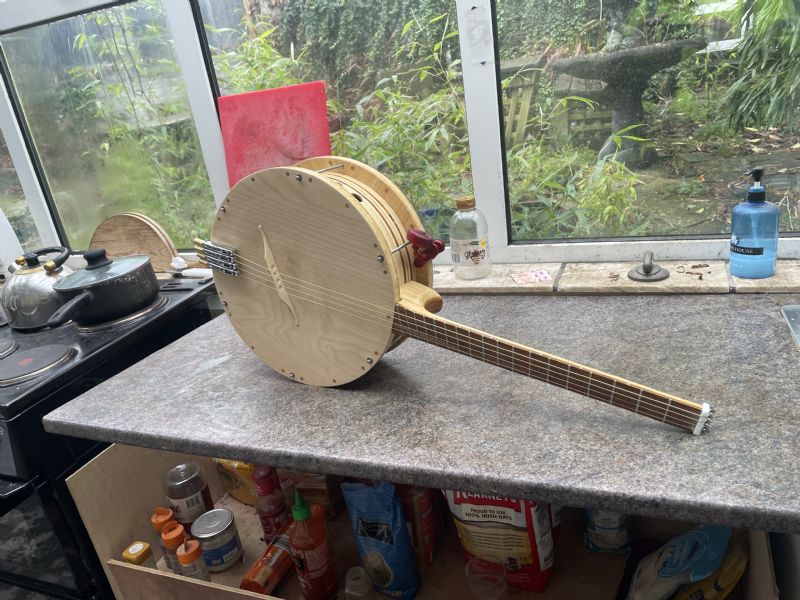
The part of the neck that crosses inside the body acts as a counter weight to help the balance of the neck. It stops clear of the far side some resonator guitars use this arrangement to add to the resonance of the neck. With this counter weight system it is actually better to have no scroll at all, so I'll be keeping the scroll as light as possible. For my guitars and banjos to maximize this feature I make them headless.
Edited by - martyjoe on 04/05/2026 13:13:02
Headless five string banjo and headless tenor guitar.
Edited by - martyjoe on 04/05/2026 13:26:53
Cool! When can we hear? :-)
Hmm, yes I never thought about it, but does violin/fiddle scroll have any function beyond decoration? I have seen them carved fancifully into faces, oak leaves, etc so I guess there isn’t a big effect on sound…
In a conventionally laid out instrument with a headstock or a pegboard and scroll there is a pivot point at the string ends ie bridge and nut. The mass that is beyond those points act as a counter balance which has an effect on the resonance of the instrument. You often hear of banjo players that swap out their tailpieces for a heavier brass one Likewise there are various weighted accessories for guitars that claim to improve resonance. The issue with guitars and similar instruments is that if you add mass out beyond the nut you start to get too much neckdive. Violins have a lovely artistic scroll which absolutely contributes to the resonance of the instrument. If you hold the scroll as you bow any string you will appreciate how important it is. I wanted to loose the headstock on my early banjos to reduce neckdive. The resonance did suffer accordingly. Then I took out the screw connecting the dowel stick (none of my banjos require dowel sticks or co-ordinator rods because the back is glued to the rim preventing it from going egg shaped) and opened a clearance to the rim. All of a sudden the resonance came back in spades. This is because what was acting as a dowel stick is now acting as a counter balance and now the pivot point is at the heel connection to the rim. All of sudden not having any mass beyond the nut is an advantage.
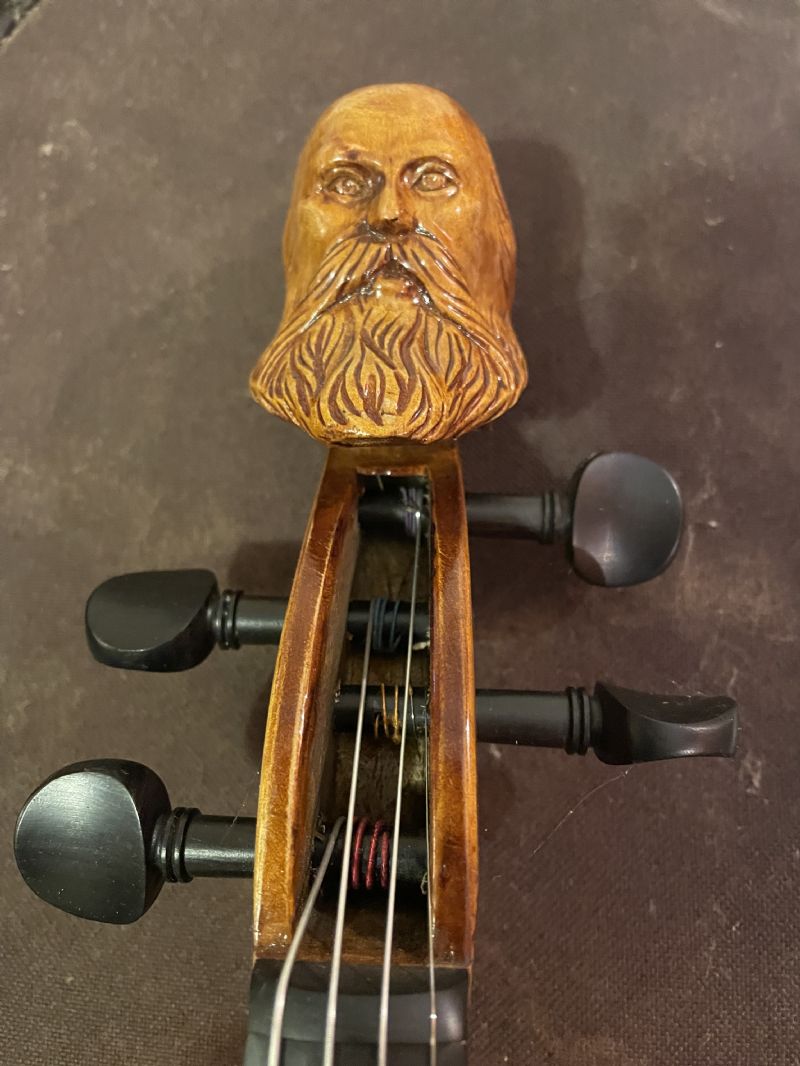
One of my violins. This little fella looks great a Christmas time with his mini Santa hat.
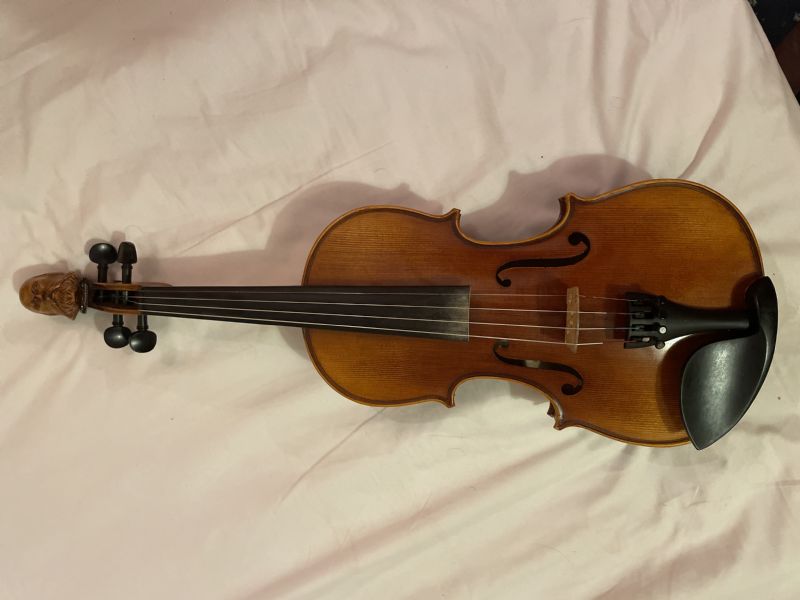
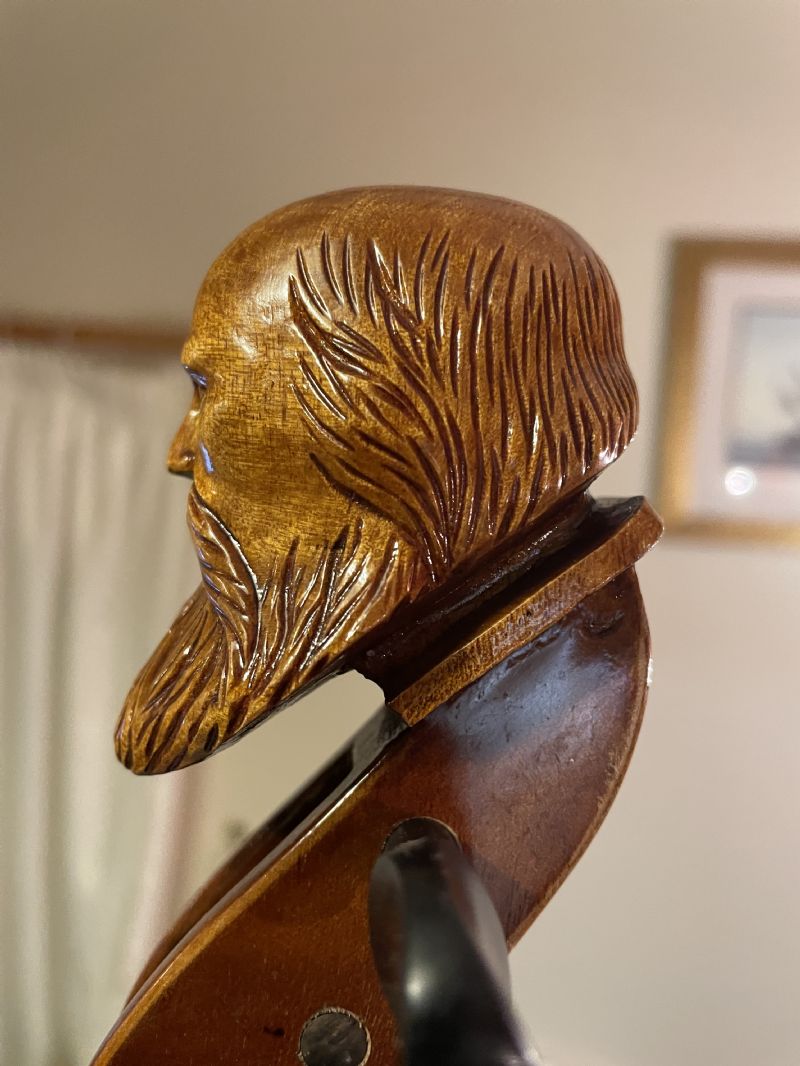
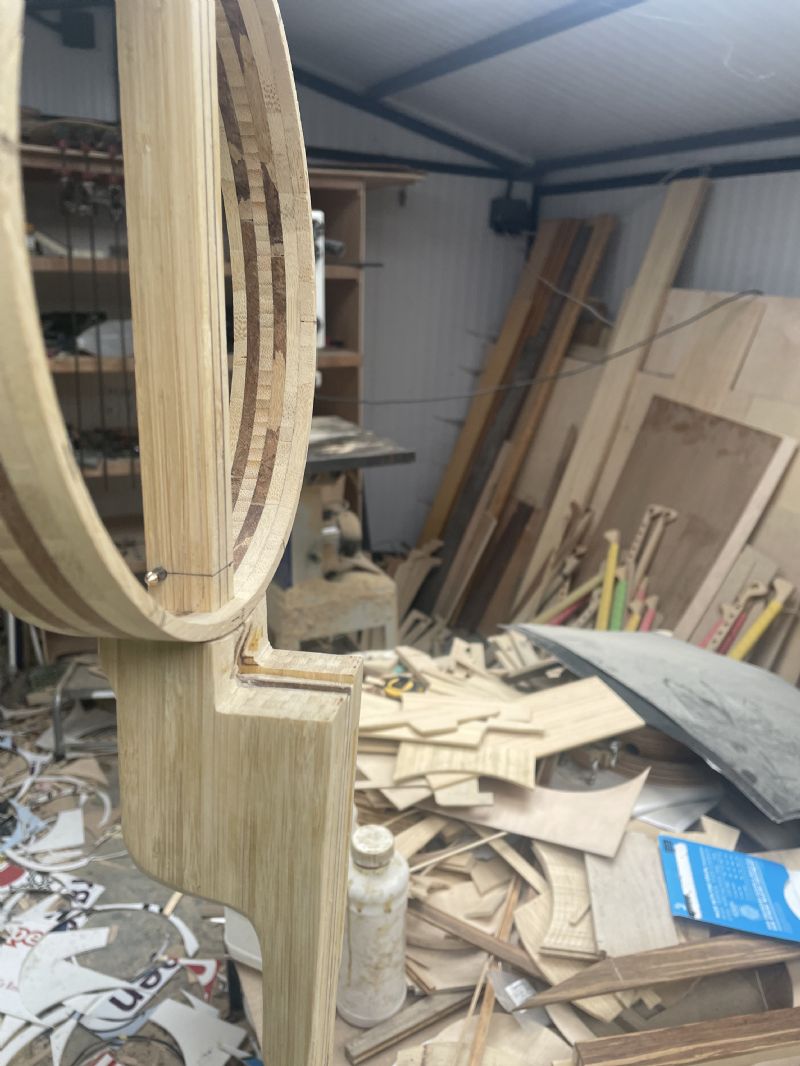
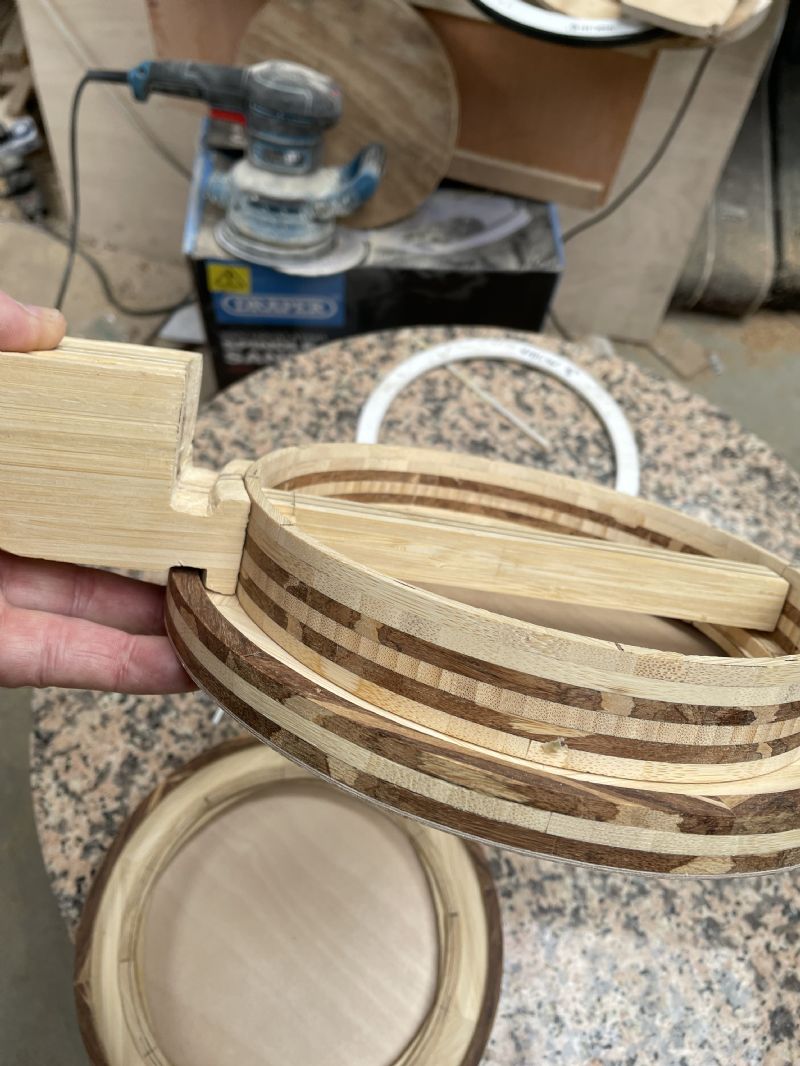
This morning I finished seating the body to the neck. Marked and drilled for the 4mm brass pin to hold it to position. The pin is located low on the neck to firmly hold the bottom of the neck in place, the strings will do the rest once it’s all under tension. I always feel that this is a bit of a milestone with any construction.
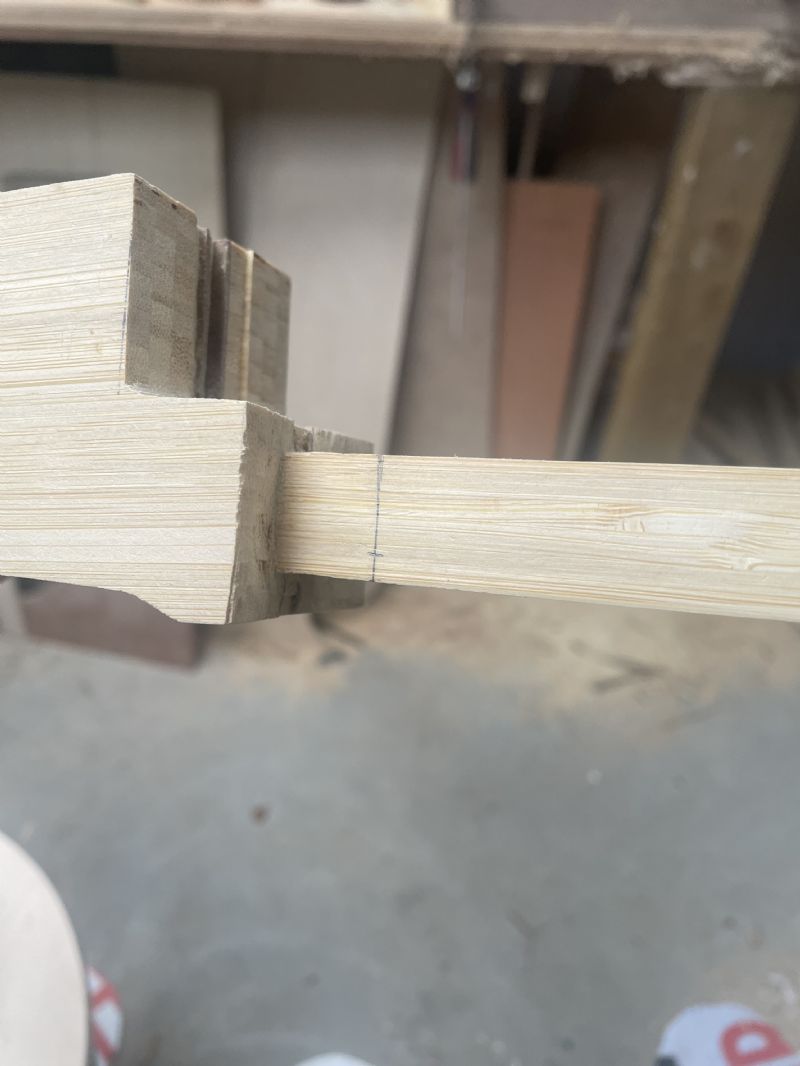
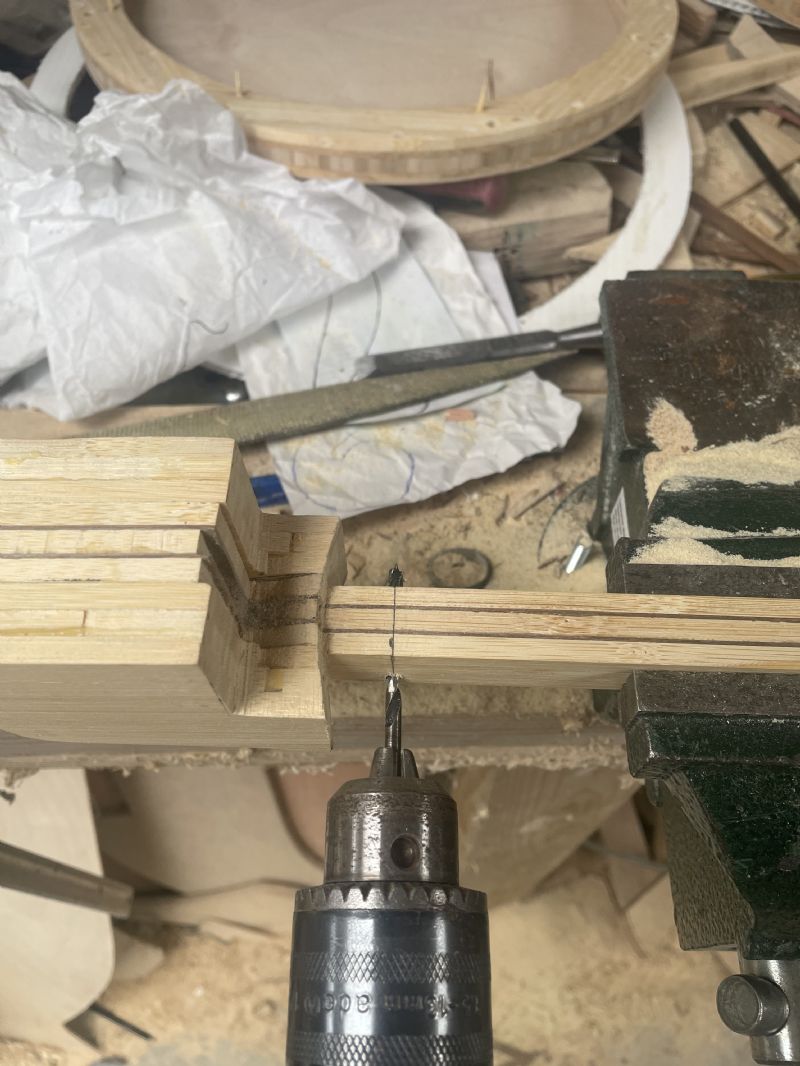
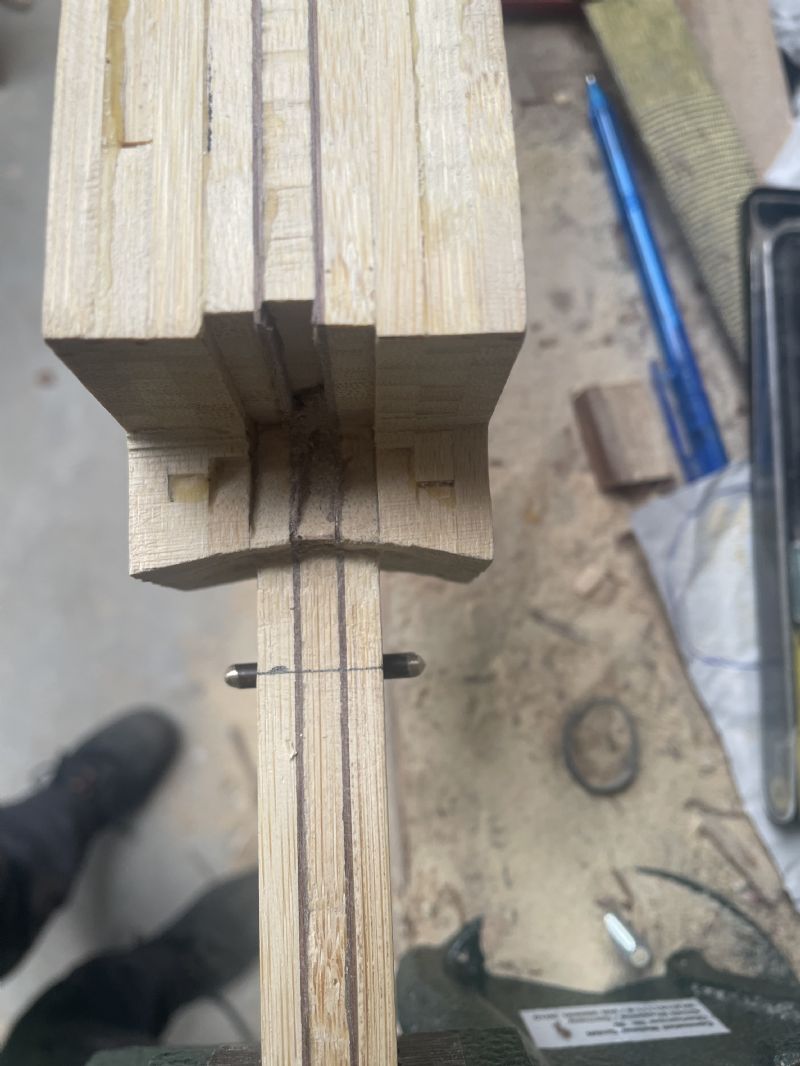
Edited by - martyjoe on 04/06/2026 06:17:30
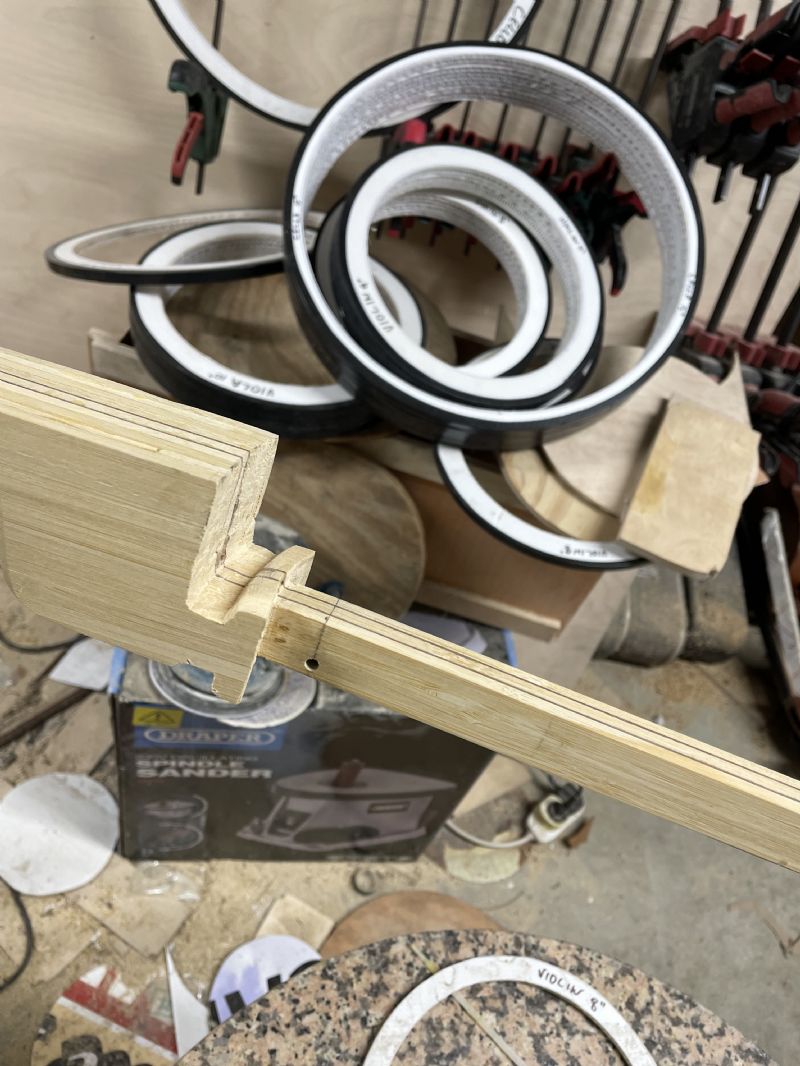
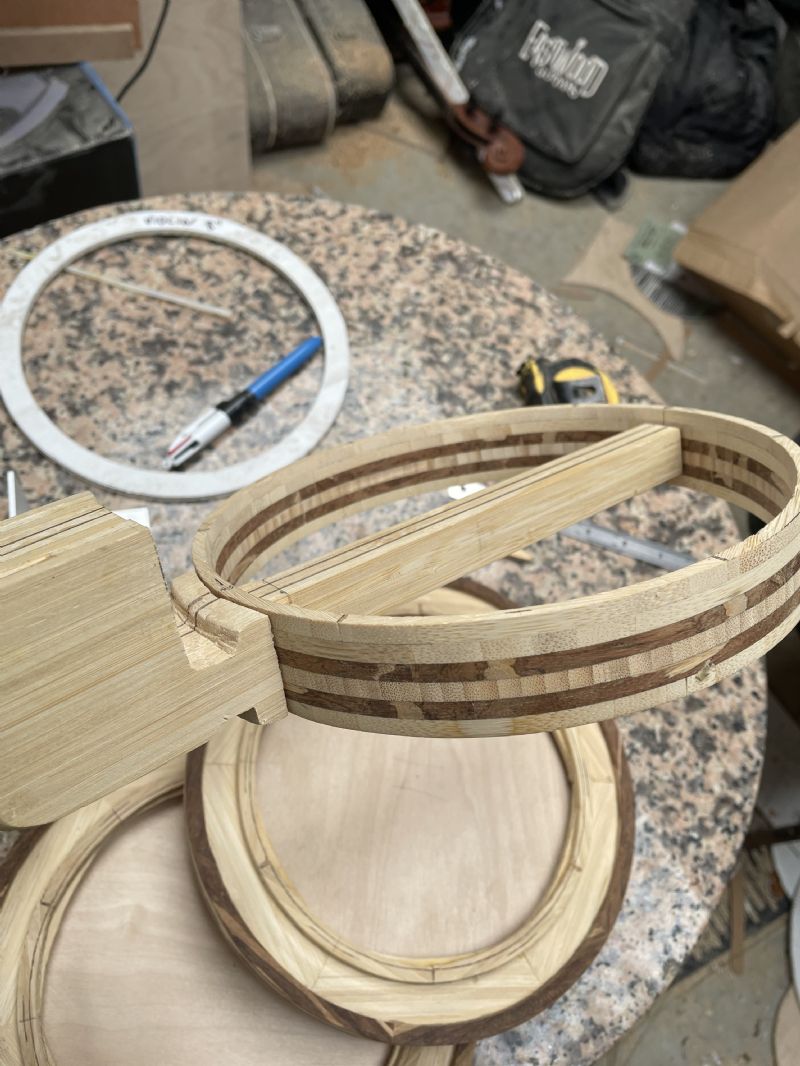
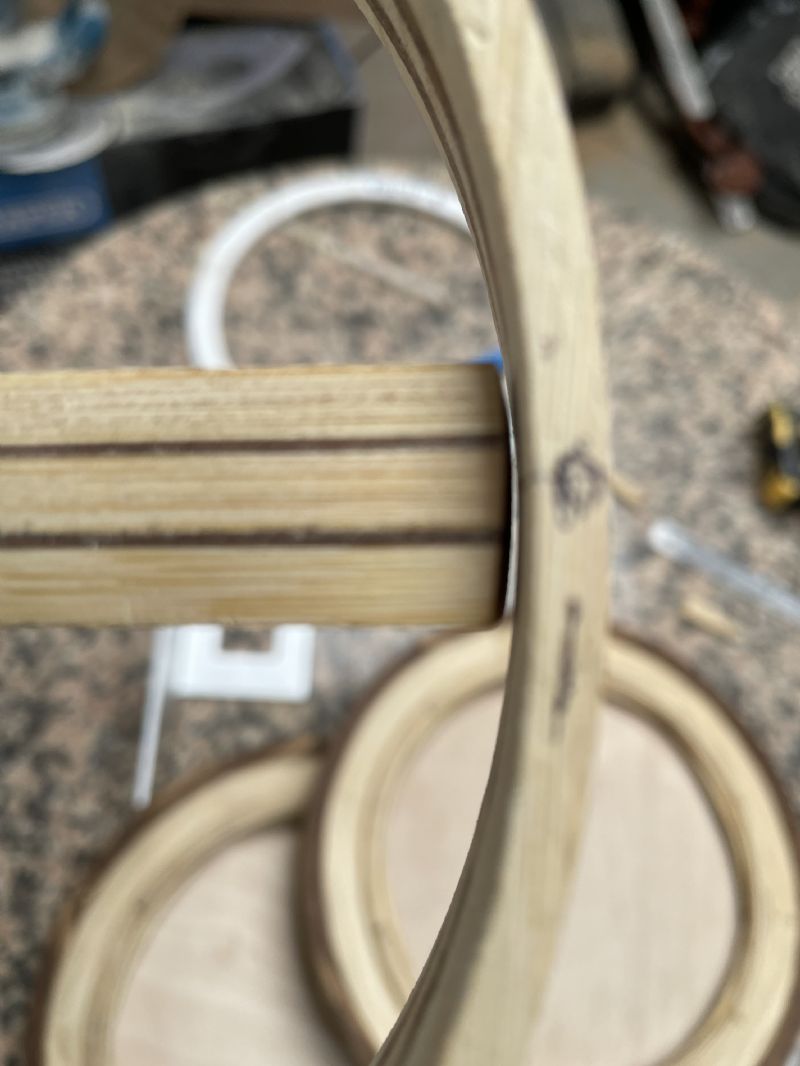
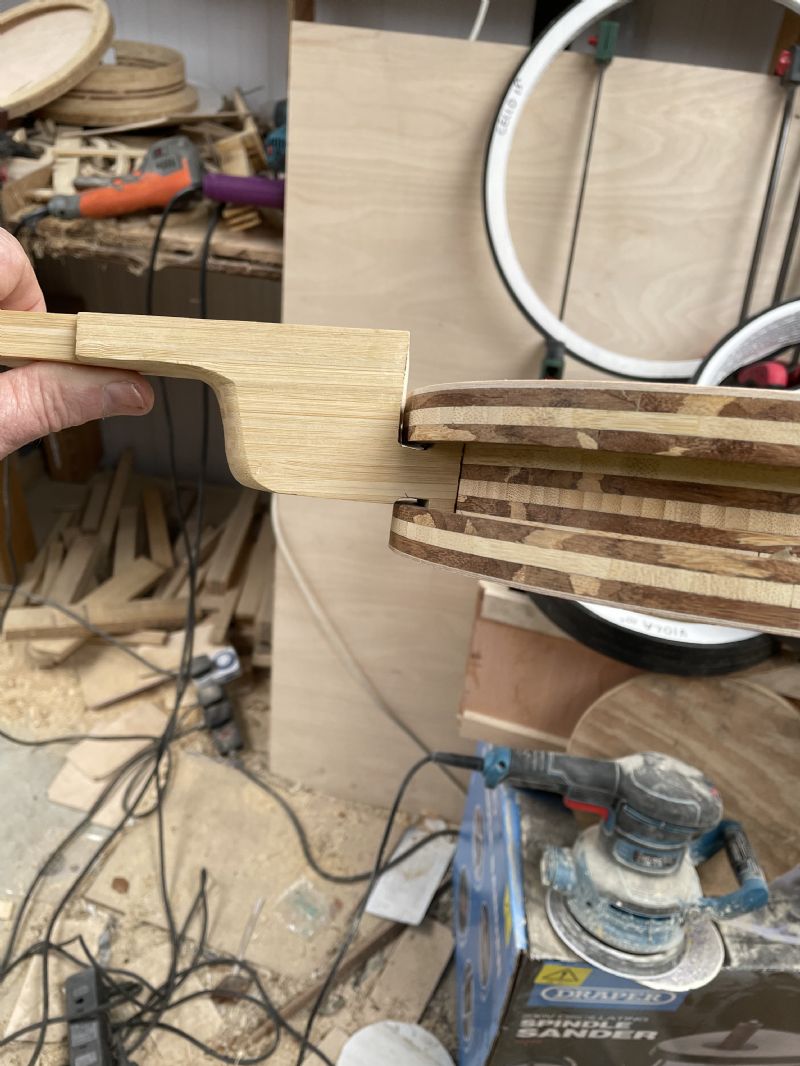
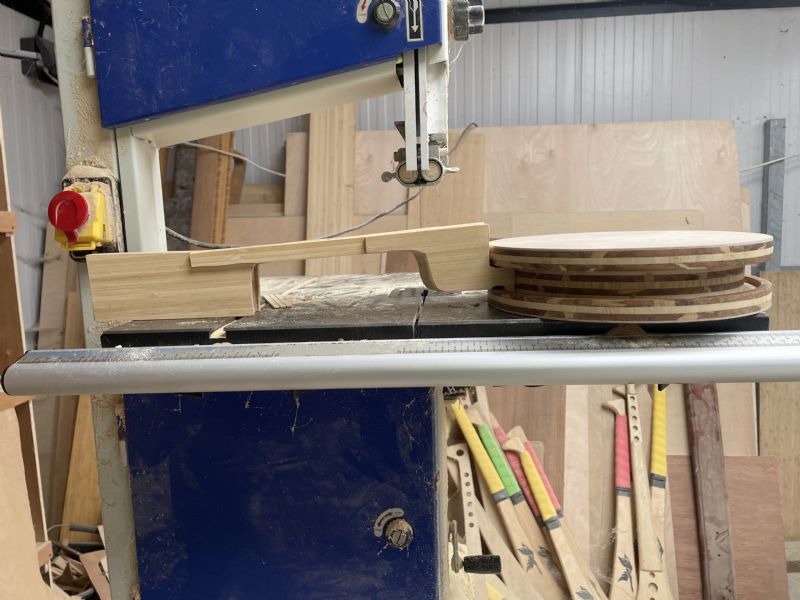
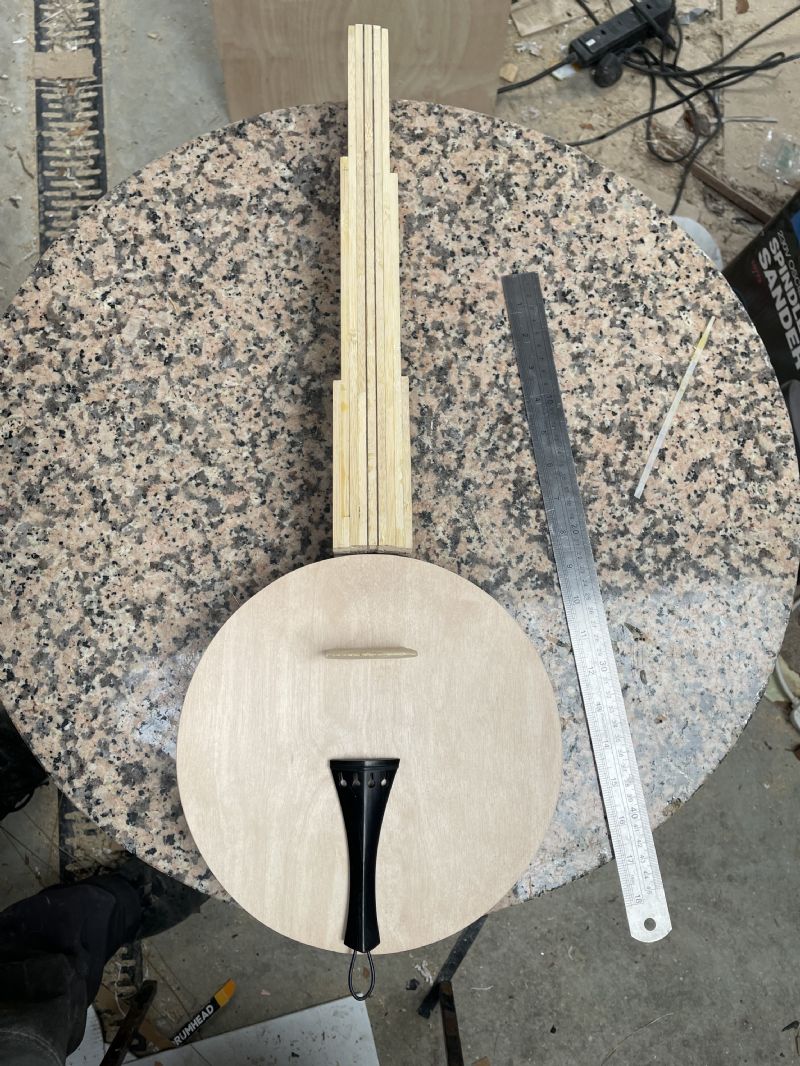
I tidied up the area on neck around where top and back are in close proximity. This means there has to be a healthy clearance for when the top and back are bolted together so that’s pretty much a guess at the moment. You can see a tiny gap between the inside end of the neck and the body. Now the back is placed on the body, then the top. Starting to take its proper shape. The tailpiece and bridge placement give an idea of how much room there will be to freely bow it. Because it is a dead flat top surface the bridge will be a good bit taller than a regular archtopped violin.
quote:
Originally posted by The Violin BeautifulTh mandolin player next to me at a session last weekend had a round mandolin made with a wood top and body and banjo shape. I hadn’t seen one like it before. This one wasn’t especially loud, and it had a softer sound that blended more than a lot of other mandolins I’ve heard.
Maybe it was otherwise built to conventional lines with fairly standard non lightweight bracing, light sides and a sound hole in the soundboard. Plus of course a regular scale length. By your description it still sounds like it's a nice instrument
quote:
Originally posted by martyjoequote:
Originally posted by The Violin BeautifulTh mandolin player next to me at a session last weekend had a round mandolin made with a wood top and body and banjo shape. I hadn’t seen one like it before. This one wasn’t especially loud, and it had a softer sound that blended more than a lot of other mandolins I’ve heard.
Maybe it was otherwise built to conventional lines with fairly standard non lightweight bracing, light sides and a sound hole in the soundboard. Plus of course a regular scale length. By your description it still sounds like it's a nice instrument
I'm not sure if it was this exact model, but it looked like this:
Ok. That’s interesting because those things are supposed to be loud. The resonator does focus the sound directly out to the front of it so maybe that’s a factor.
Interesting! MAybe round mandos will become the next big thing…I can never hear mando players unless I sit right next to them.
Re Round violins…without the “cut out” sides, will have to see how bowing goes on the E and G strings, would it get tricky? I think round works for plucked instruments but it might get difficult for bow access depending on where you put the bridge (center of circle is the widest part, not great for access- but it sounds like you’ll be putting it to one side or the other). If you put it towards right side, E access good but G access not good, and vice versa? I guess we shall wait and see what you come up with!
quote:
Originally posted by NCnotesInteresting! MAybe round mandos will become the next big thing…I can never hear mando players unless I sit right next to them.
Re Round violins…without the “cut out” sides, will have to see how bowing goes on the E and G strings, would it get tricky? I think round works for plucked instruments but it might get difficult for bow access depending on where you put the bridge (center of circle is the widest part, not great for access- but it sounds like you’ll be putting it to one side or the other). If you put it towards right side, E access good but G access not good, and vice versa? I guess we shall wait and see what you come up with!
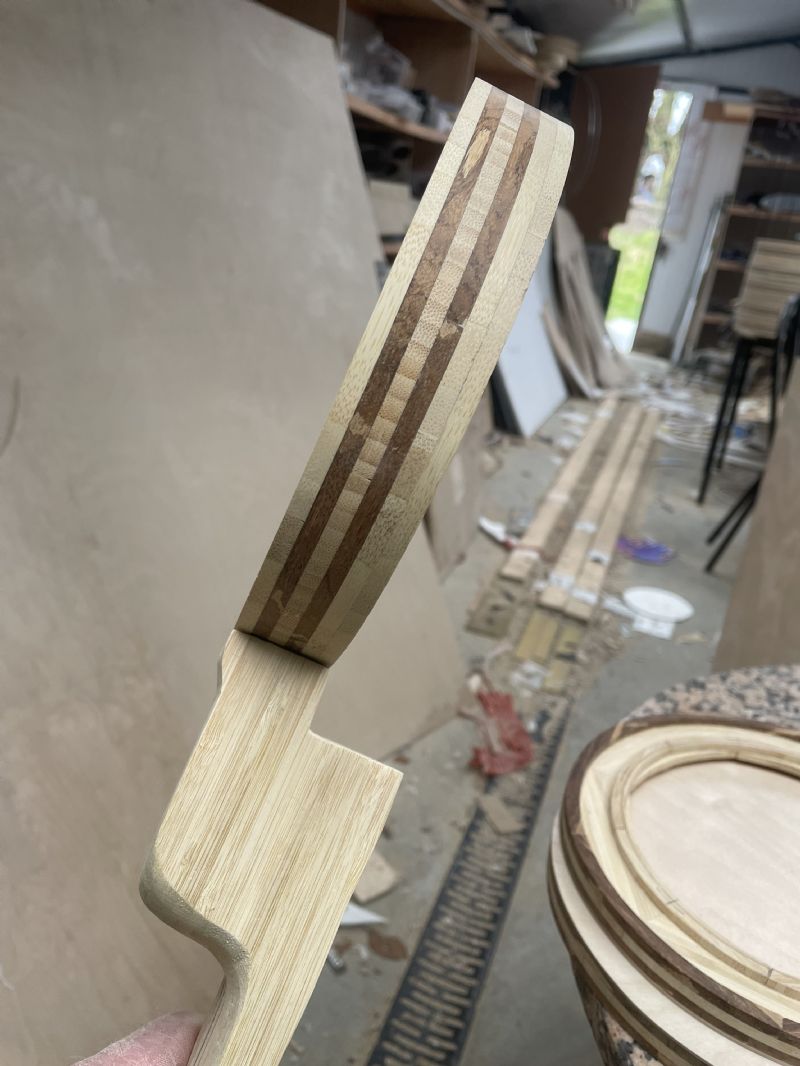
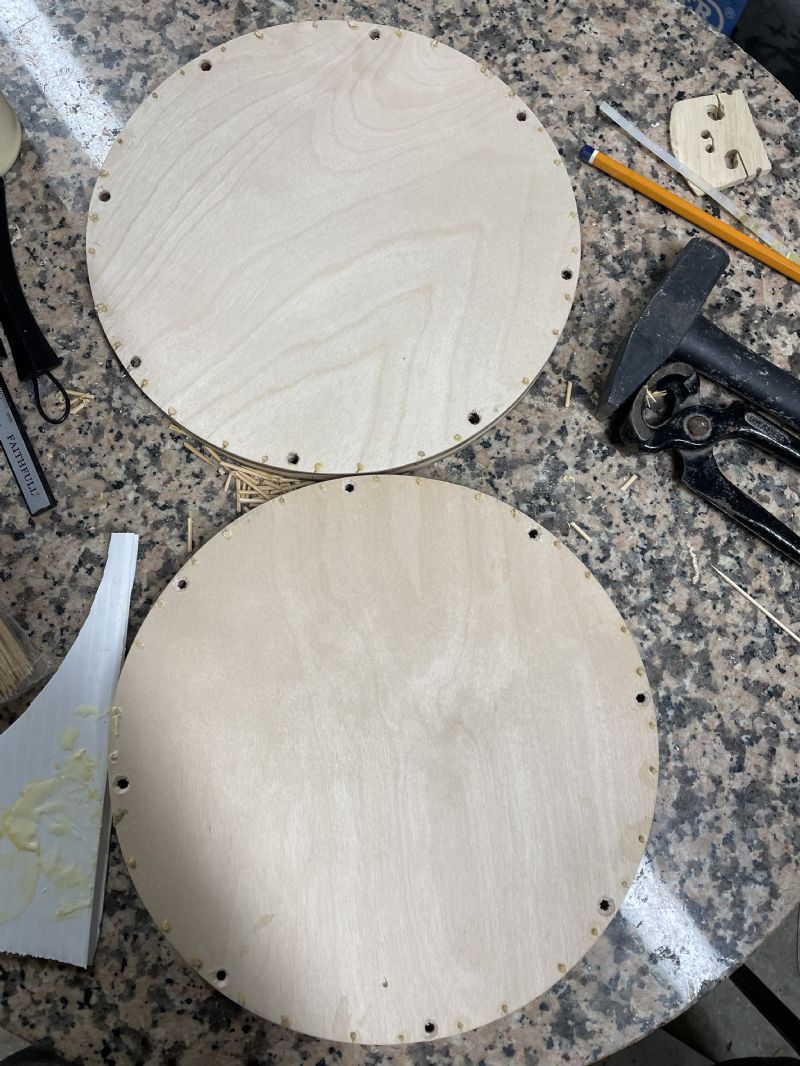
NCnotes. Just have a look up at the last photo. That is where the bridge is to be located. Even if you were to bow over the top of the bridge you can isolate any one string. You can see from the side shot that when a fingerboard goes onto the neck there will be plenty of clearance to the body and the correct break angle back to the tailpiece.
quote:
Originally posted by martyjoeOk. That’s interesting because those things are supposed to be loud. The resonator does focus the sound directly out to the front of it so maybe that’s a factor.
It may have been that the player was being careful not to play too loud. We were in a venue where the sound really carried through the whole building and everyone was aware of it. It just struck me that the sound of the instrument was much more woody and...round!
Oh yea, I see, in the last photo! Thanks for answering my question.
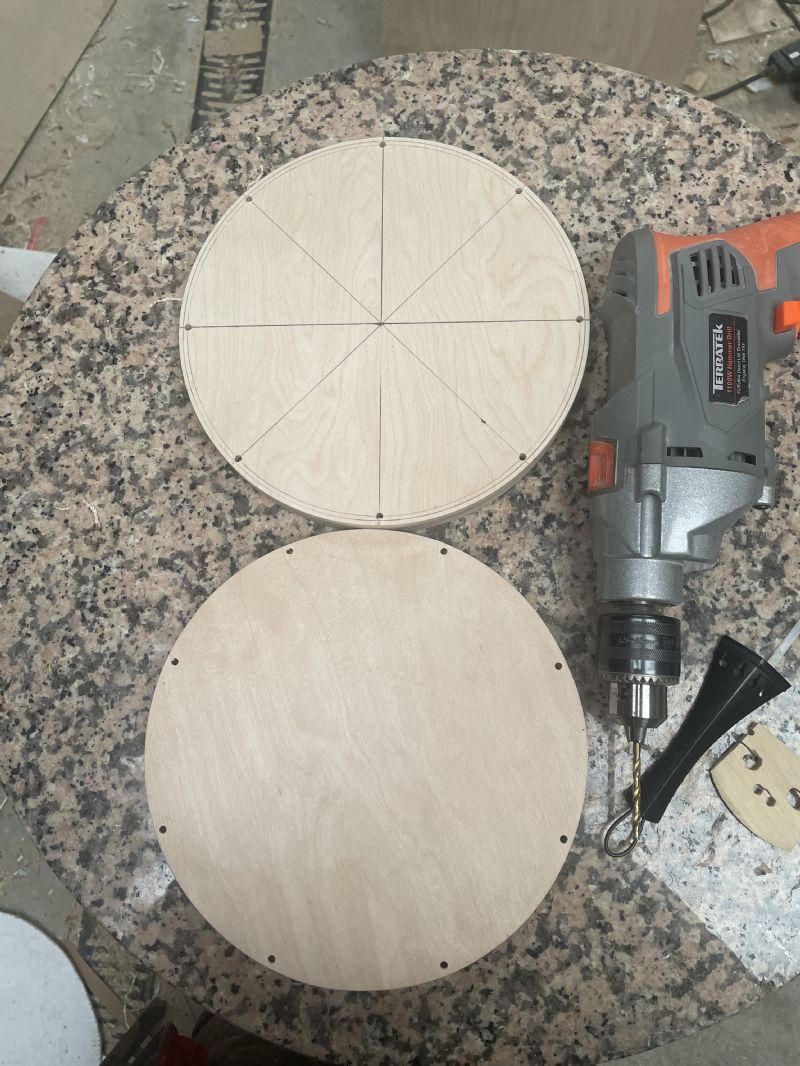
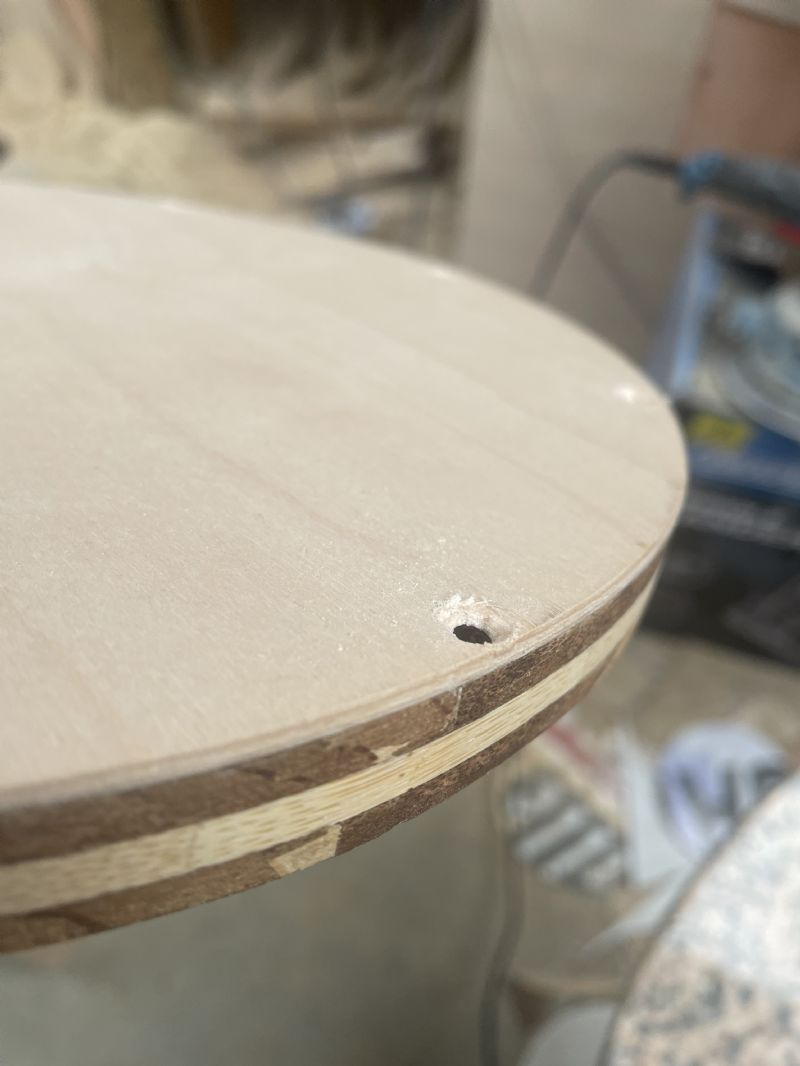
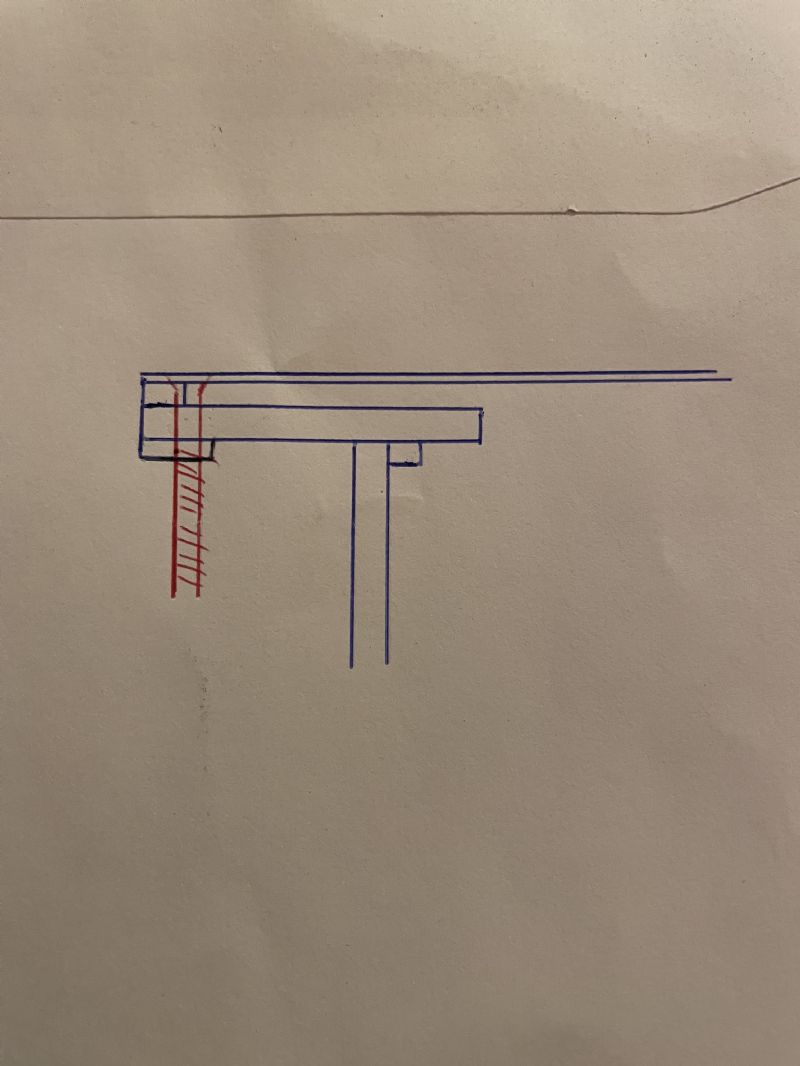
I think it’s about time to prepare for the bolts. I have stainless steel bolts and stainless steel receiver nuts on order from England. I made up a template to drill out the holes accurately. The bolts will be 4mm diameter and the receiver nuts 5mm. Both bolts and receivers need to be counter sunk. Then I drilled in from the inside 5.5mm diameter to within 4mm of the surface. This will ensure that the bolts will not be rigid and as the tension brings them closer they will freely tilt a little which will in turn apply tension to the both top and back surfaces. This tilting action is whole essence of my invention.
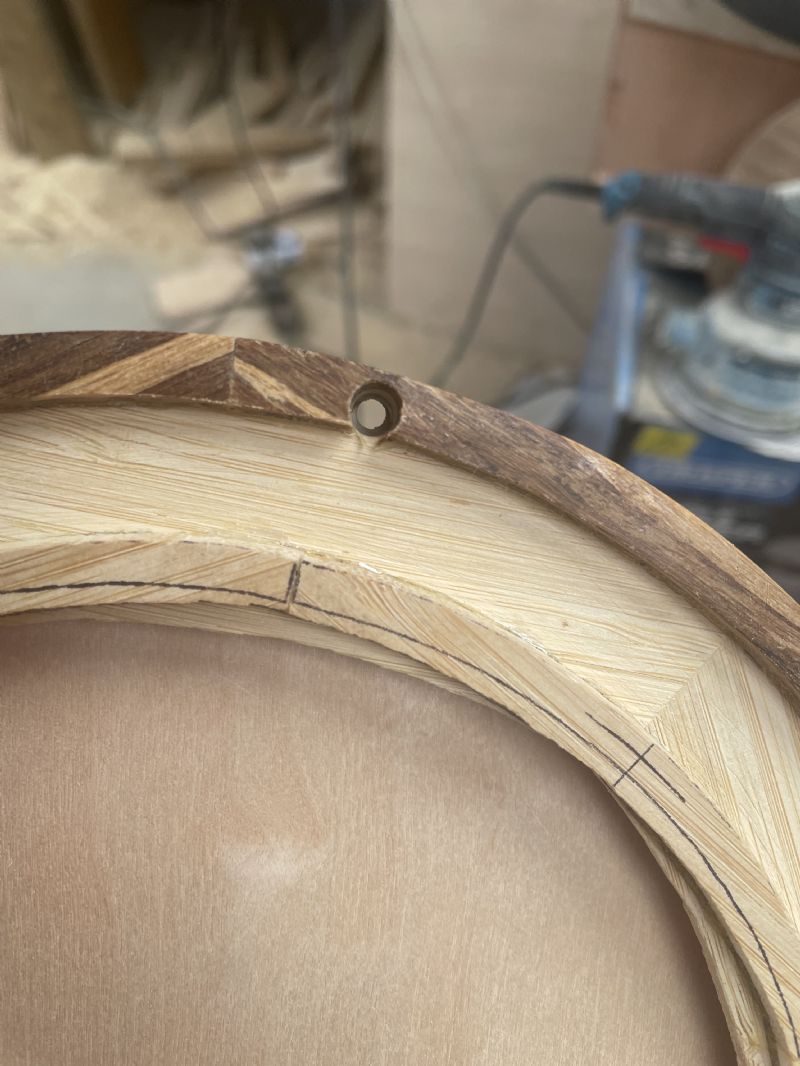
Here’s a sketch of how the whole cantelever thing works. The wood bits are the darker colour and the bolt is in red.
Edited by - martyjoe on 04/08/2026 08:58:24
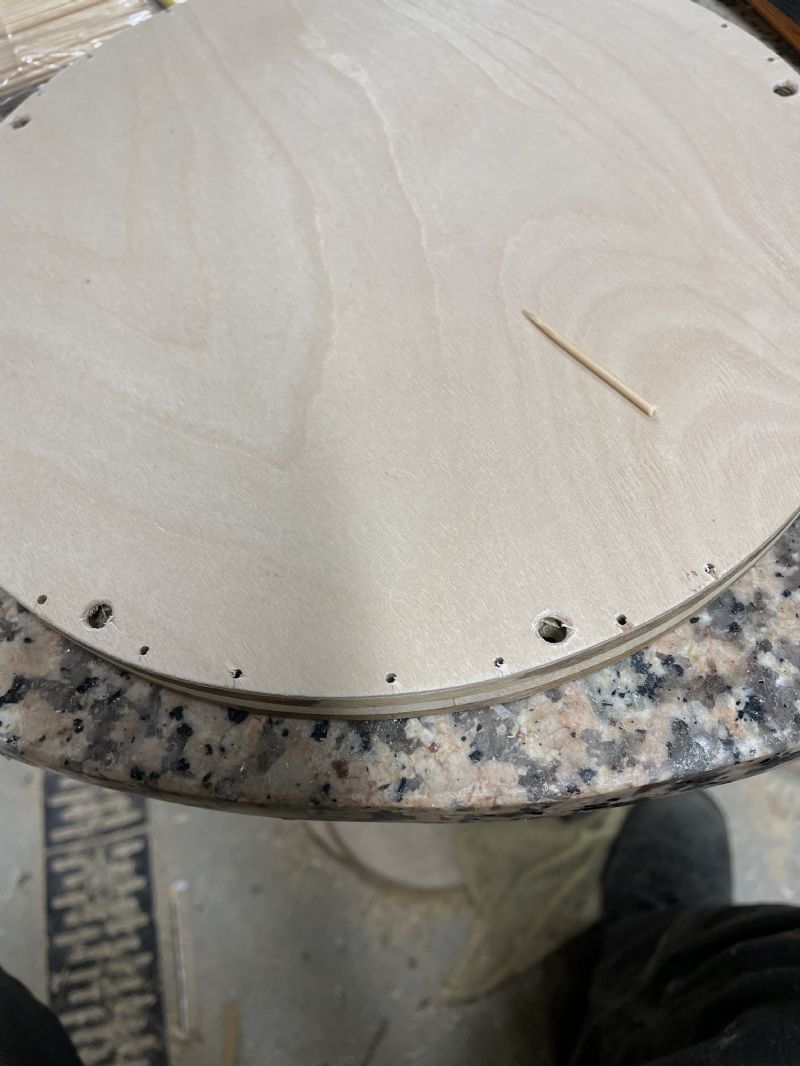
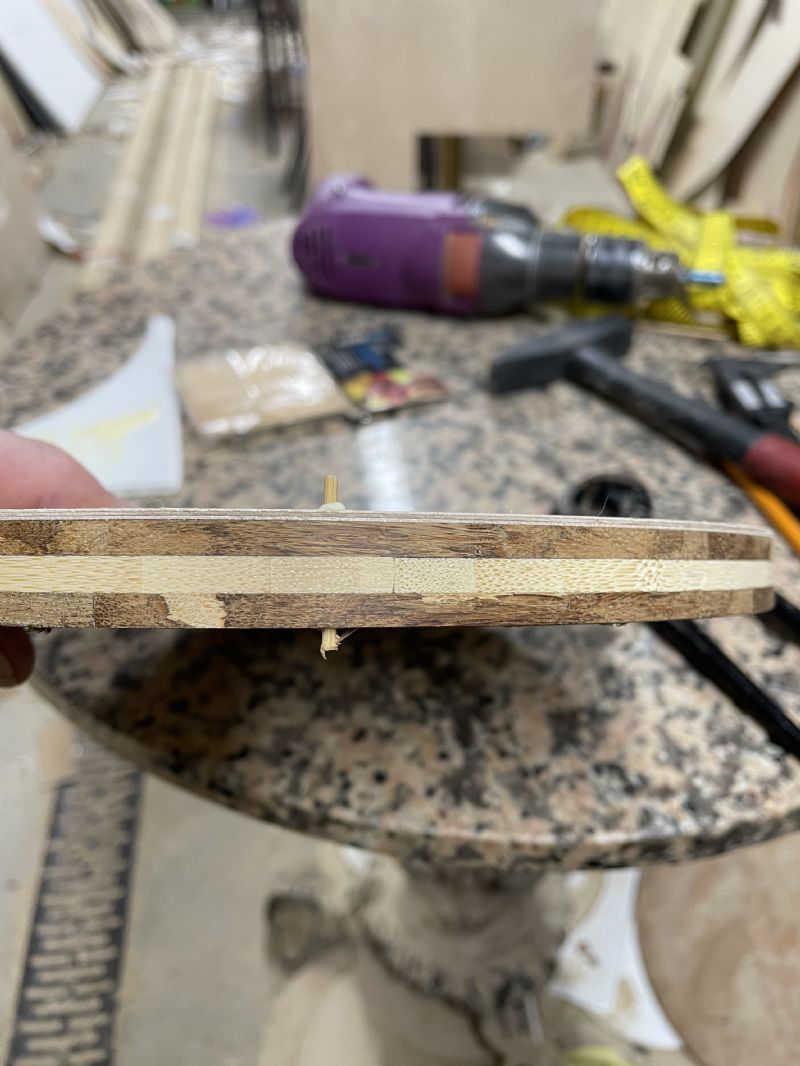
Due to the strain of keeping the top and the back under constant tension and of course the fact that it has to vibrate for a living it is getting some dowels to hold it strong. 64 of them. 2mm bamboo cocktail sticks are just perfect for the job. Glued in and they’ll be ready for filing down tomorrow.
Wow. I'm truly impressed!
Martyjoe, this is really cool!! Thanks for sharing your progress in such detail. But, so far we're seeing lots of parts of the elephant but not the whole elephant.... and I confess I don't understand the role of the bolt in vibrating the top. And where is the receiver nut in your diagram? I'd love to see a cross section of the whole sound box and neck. Maybe all will be clear in the end-- I will possess my soul in patience!
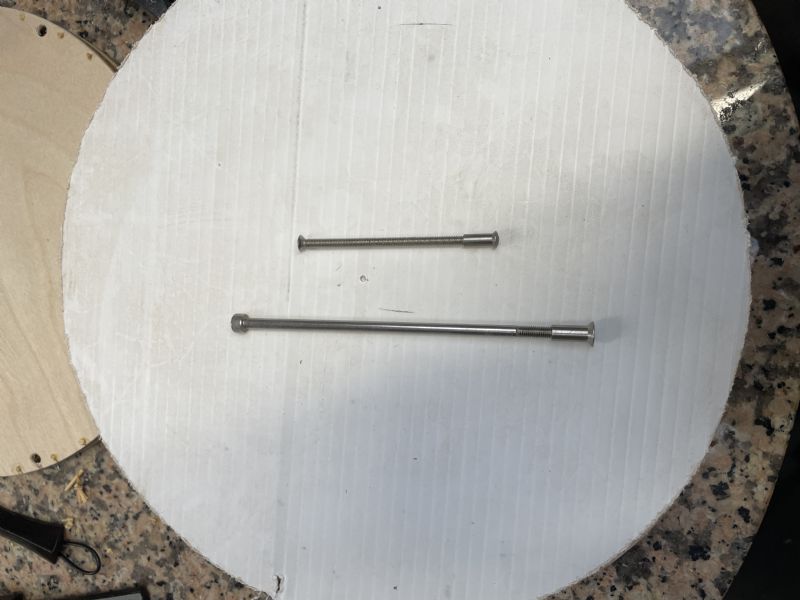
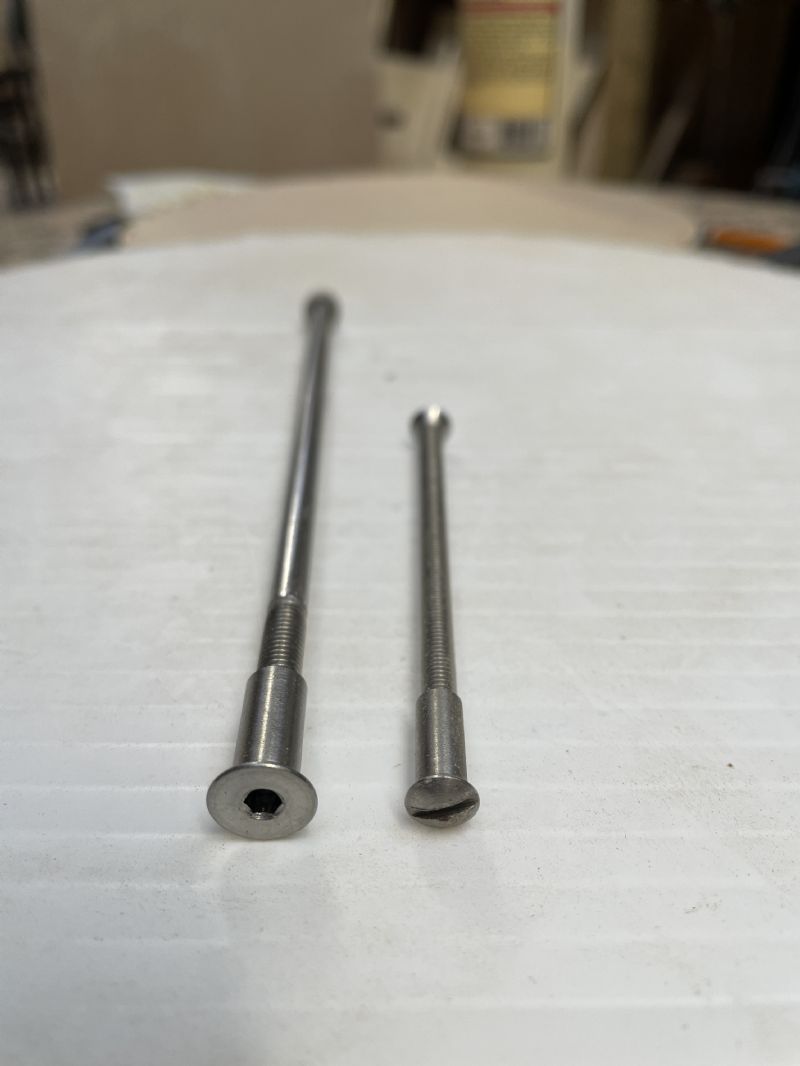
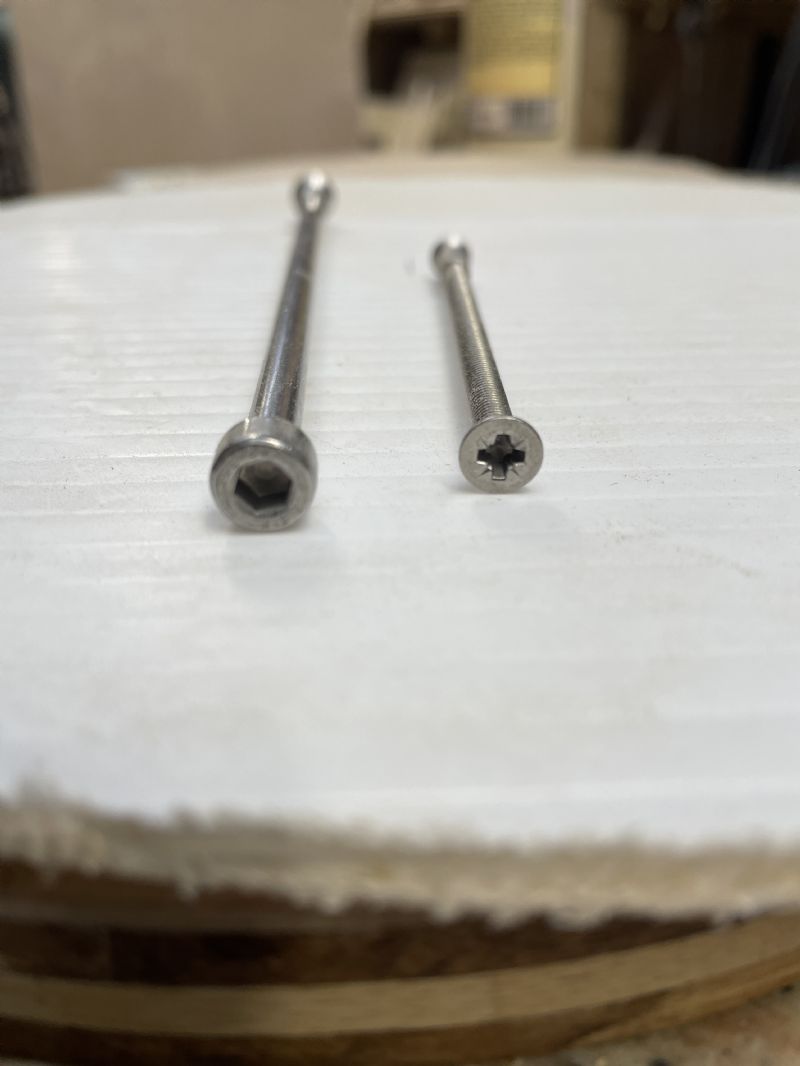
JonD the sketch is the same for the top and the back. The only differences being that: 1, the soundboard thickness is a little more for the top as it has to carry the weight of the bridge and string tension. And: 2, the bolts are fed through the top with a receiver sleeve nut into the back. Sorry for omitting the ‘sleeve’ word. Here’s a photo of the nuts and bolts I intend to use. The larger is obviously for the cello.
Terms of Use | Privacy Policy | Privacy Consent (EU/GDPR Only)
Copyright 2026 Fiddle Hangout. All Rights Reserved.


