DVD-quality lessons (including tabs/sheet music) available for immediate viewing on any device.
Take your playing to the next level with the help of a local or online fiddle teacher.
Monthly newsletter includes free lessons, favorite member content, fiddle news and more.
Premier Sponsors


|
Please note this is an archived topic, so it is locked and unable to be replied to. You may, however, start a new topic and refer to this topic with a link: http://www.fiddlehangout.com/archive/56929
Notenut - Posted - 07/22/2022: 08:48:08
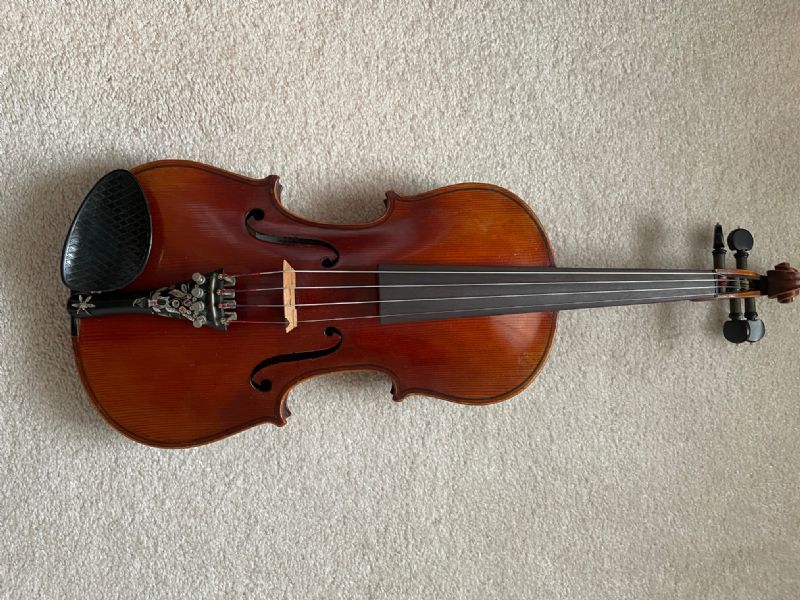
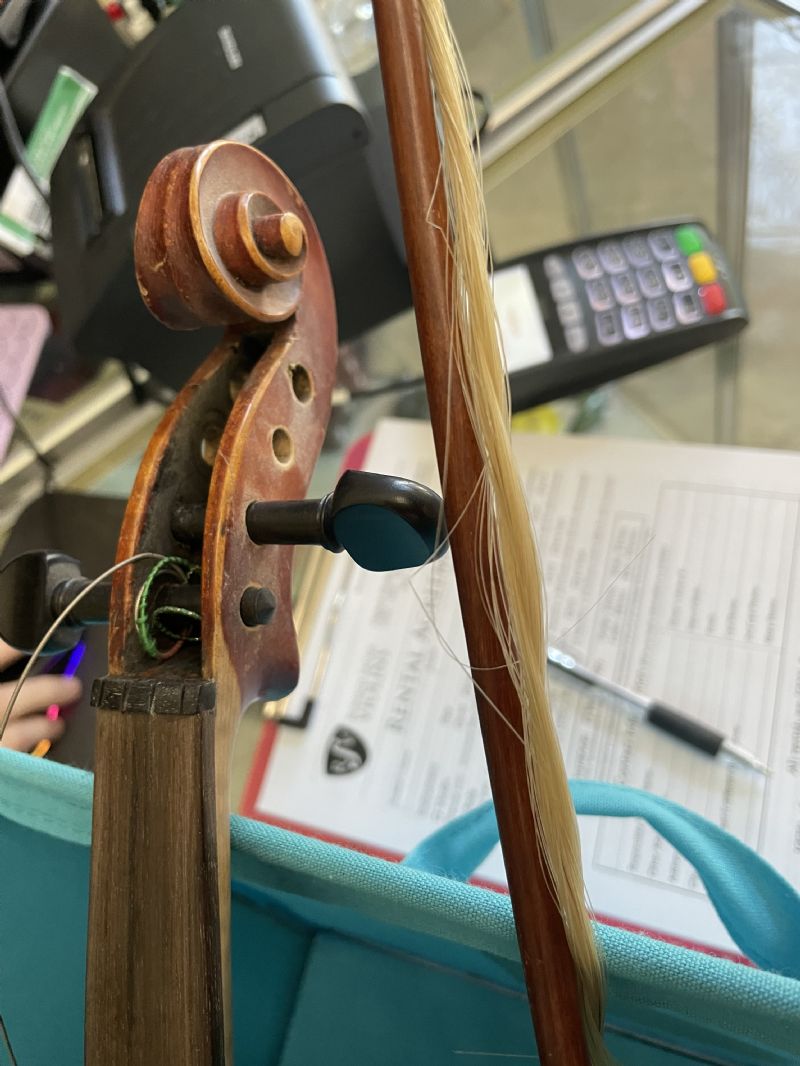
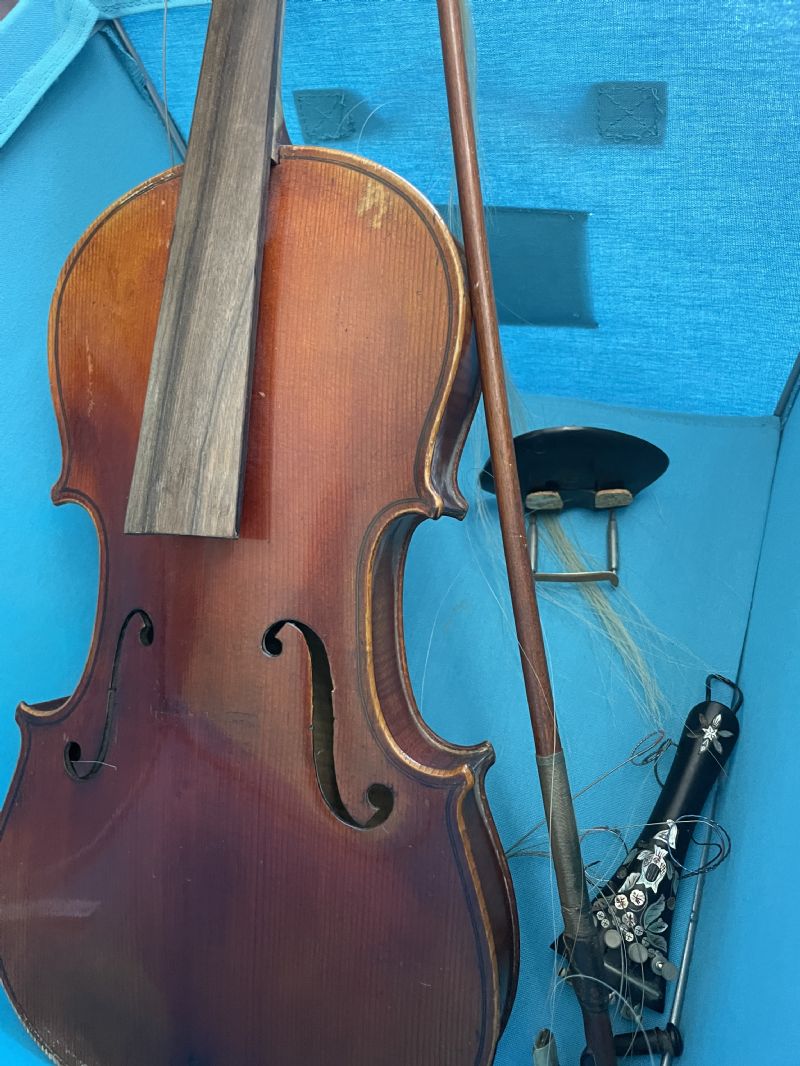
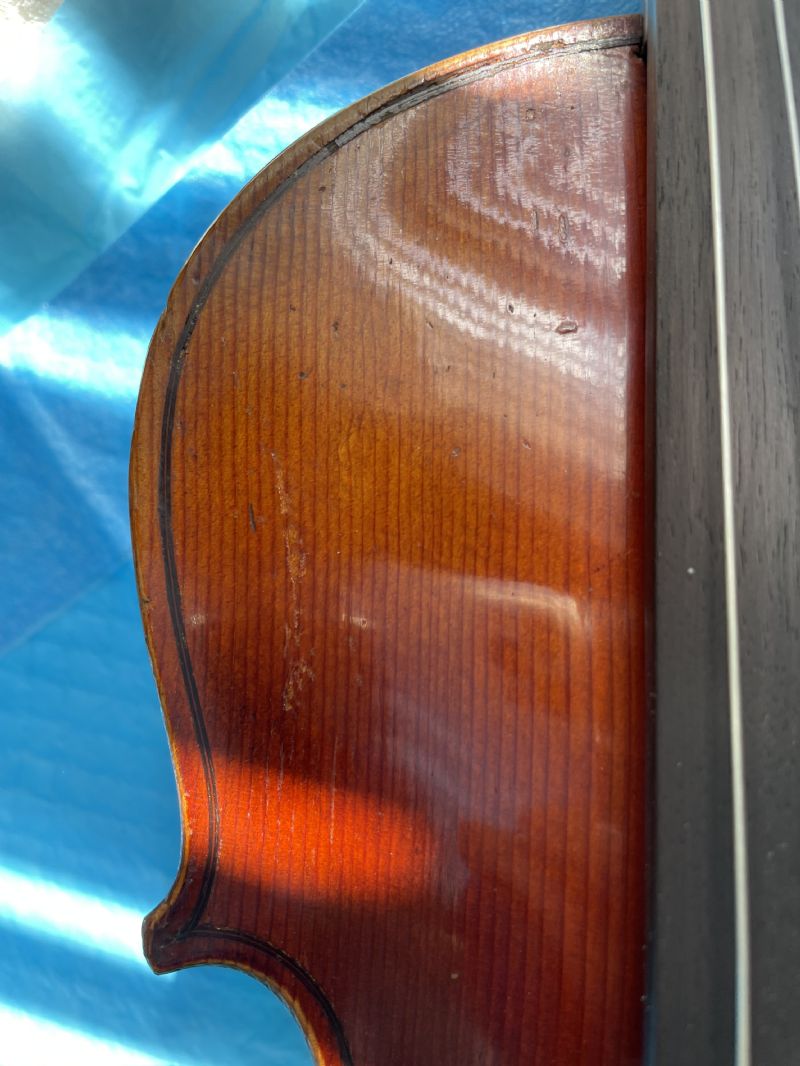
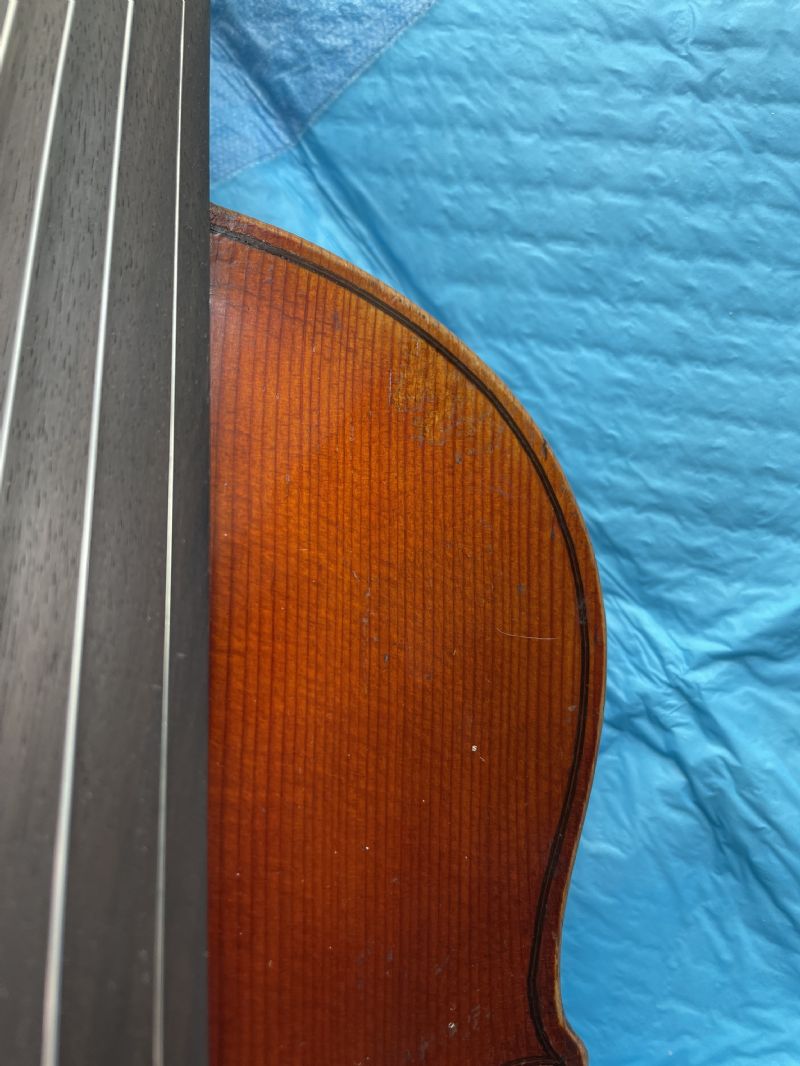
I took my 1940 ish fiddle to Ronald Sachs violins in Atlanta and they ruined the finish. I took it in for repair and the "cleaned and polished" it to restore the finish and they dyed the fretboard. It now looks like one of the $10 Chinese violins they rent for $20 a month. Any ideas on how I can remove the polish? they removed the scratches for the most part, and even though they say they didnt use a colored polish, it sure looks like they did. They claim they used Core cleaner and polish on it. The body is all shiny and plastic looking. Can the fretboard be scraped down to remove the dye, it had a beautiful figure in it. I am just sick over it, especially when I told them multiple times I wanted to preserve the patina. Turns out they did not know what patina is.
Edited by - Notenut on 07/22/2022 16:46:41
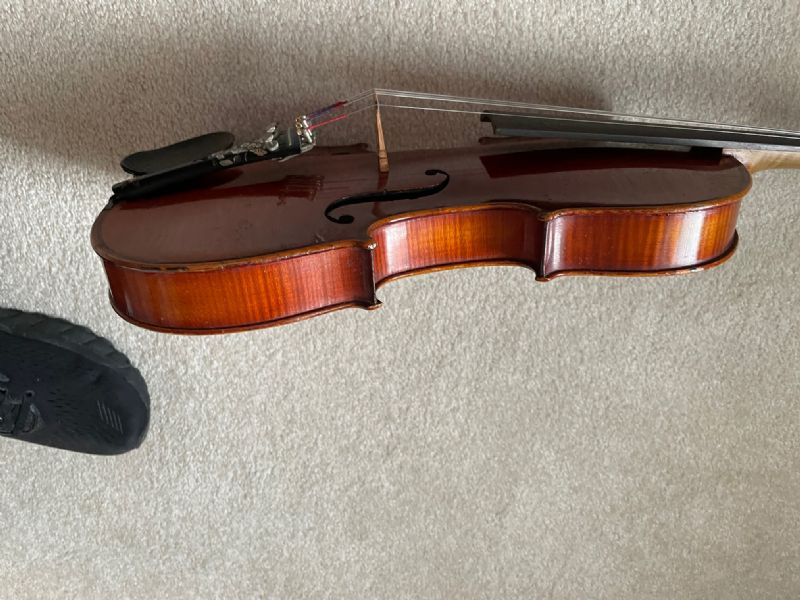
gapbob - Posted - 07/22/2022: 10:17:54
Whoa. Anytime I hear anything about removing finish, I tremble.
However when I was in college (1975 or so) I was watching television and they were talking about using milk to remove the finish on a violin, I have no idea about the veracity of that or the safety of that, but there are lots of folks here that will comment I'm sure.
You should post some pictures, and give it some time cause maybe you'll learn to like the new look .
The Violin Beautiful - Posted - 07/22/2022: 12:01:13
Can you post pictures before and after?
Are you sure that any damage was done? If they removed rosin and dirt, they were properly cleaning the instrument—rosin buildup on its own is not patina. I don’t advocate overdoing the cleaning or making everything shine like a bowling ball, but proper cleaning ought to enhance the refractive quality of the wood and varnish.
Dying the fingerboard isn’t an uncommon practice if the board is made of a cheap wood instead of ebony. There is a tradition of fingerboards being jet black. Now that modern makers are starting to experiment again with alternative woods, there is a small amount of acceptance of non-black fingerboards.
Polish doesn’t contain any colorants because it’s not a varnish. There are lots of cream polishes out there that rental shops use. Personally, I tend to avoid them because they leave behind an oily film, but they’re in common use. If anything, there’s a chance that a polish would remove color, as polishes work by abrading the surface. If the color looks different, it’s likely because the cleaner varnish refracts the light better and shows more colors and wood figure that were less vivid when there was something on top of the varnish.
If you were indeed clear that you didn’t want anything done to the varnished surface, I think that either they should have left it alone or just refused to work on the instrument. I will say that when I’m doing a repair, I want the instrument clean so that nothing is contaminating the damaged areas. Also, once the repair to the wood is completed, it’s important to see the true color of the varnish so that proper color matching can be done when the varnish is touched up after the cracks are closed. Keep in mind that there are two surfaces to repair when there’s a crack: the wood and the varnish.
As an example, I’m restoring an old German violin now that had some long top cracks. They were full of old glue and dirt and needed extensive cleaning before they could be closed. Because I had open cracks, I didn’t want to clean the whole instrument and get dirt into the exposed wood (which would contaminate it and weaken a glue joint), so I only cleaned a few millimeters around the cracks as I was working on them. When the cracks were glued and cleated and I had filled the voids in the varnish varnish, I began cleaning the rest of the instrument. There was quite a lot of dirt on the top, and I needed to get it off to see the actual varnish color. I am currently doing the color retouching to match the affected areas. A previous repairman had removed some color around the cracks, leaving them a bit lighter than the rest of the varnish in their areas. If I had done the touchup based on the color of the instrument when I started the restoration, the cracked areas would be left much darker if the top were cleaned, and a fine violin is expected to be kept in pristine condition as much as possible.
The key in these interactions between customer and luthier is establishing realistic expectations. If there was a misunderstanding, it would be best to speak with the shop directly. They may be willing to work on it further to come closer to the appearance you desire without charging you anything more. If you take it somewhere else, you’ll have to pay for the work.
Notenut - Posted - 07/22/2022: 15:35:47
First time I have tried uploading pictures. Five pictures were uploaded.
DougD - Posted - 07/22/2022: 15:54:00
There are five photos in the media section of your homepage. For easy viewing you should attach them to post, which is quite easy to do.
Notenut - Posted - 07/22/2022: 16:33:11
I dont see how to attach them to the post. Below the post section was a photo section, which is where I attached them. What am I missing? The help is much appreciated.
Edited by - Notenut on 07/22/2022 16:43:35
DougD - Posted - 07/22/2022: 16:42:03
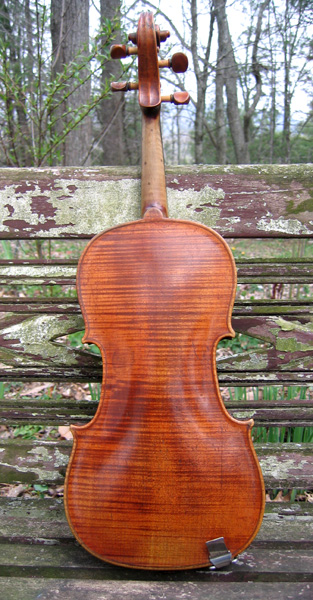
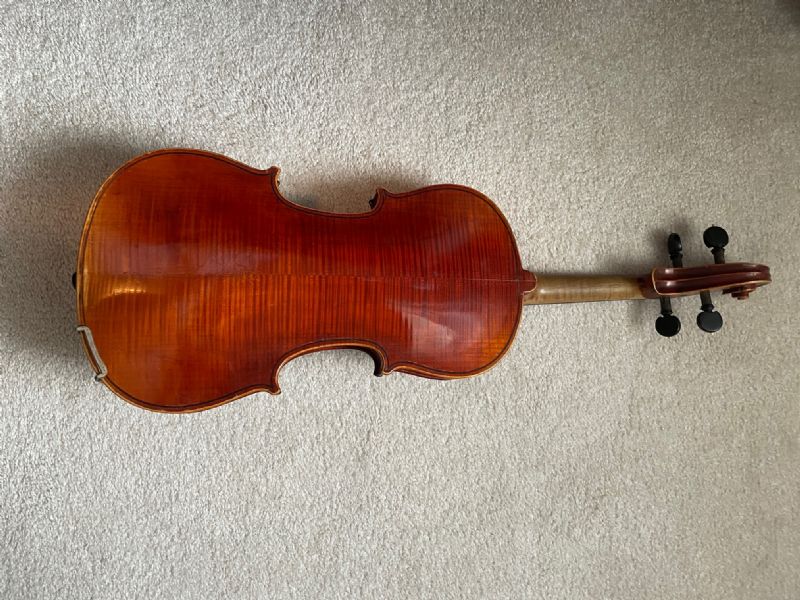
No you didn't attach them. Start a post. Directly below the text box is a section titled "Attachments," with tabs to select various types of media to attach. Just click on the photos you want and they'll appear in your post. Here's a sample of a fiddle back:
Edited by - DougD on 07/22/2022 16:43:39
Notenut - Posted - 07/22/2022: 16:47:49
I think I got it now, thanks for the help! So it is a two step process, upload the attachment and then click on them to make them attach to the post. (I put this note in for my own future reference....sometimes I forget since I use so many different communication systems for work and play.
Edited by - Notenut on 07/22/2022 16:55:32
DougD - Posted - 07/22/2022: 17:01:37
Yes, you upload them and then attach them. Looks like you've got it.
Edited by - DougD on 07/22/2022 17:02:56
ChickenMan - Posted - 07/22/2022: 19:38:23
That fiddle looks great and not at all like a high gloss Chinese violin. It looks new, and what's wrong with that considering it is 80 years old? My last old fiddle (1900-1920), was fully dark and stormy looking, which I thought looked normal and "old." I took it to my gifted luthier. It had some big cracks in the top and he made an invisible repair and cleaned it up ~like new~. It is now a beautiful musical instrument, rather than being dingy and covered in cigarette smoke and attic dust that masked the fiddle's true look.
As far and the neck goes, the dye ~will~ wear away. Eventually. 
Edited by - ChickenMan on 07/22/2022 19:40:11
KCFiddles - Posted - 07/22/2022: 20:49:00
This is my every day fiddle. It's 210 years old. Not a fancy, expensive fiddle, just an old trade fiddle. Certainly not anywhere near the most expensive I have, but I like it. I never apply any polish to it, but it's shiny and the fingerboard is black. It's missing plenty of varnish over the centuries that I choose not to replace, and I have done some touch-up to cover up the worst of the bare wood. Your fiddle will wear back to its old state soon enough. Most of my customers, mostly fiddlers, like for me to maintain there instruments for them. For when you play a lot, you sweat all over the fiddle, spray rosin all over it, and wear varnish off. The only ones I know who want to maintain a "patina" are people who don't play very much. The customers who put a lot of wear on my fiddles apologize for the wear and tear, because they know when they literally play an instrument 20 or 30 hours a week that it's much more important to mitigate wear than it is to preserve a "worn look.
Edited by - KCFiddles on 07/22/2022 20:52:53
Notenut - Posted - 07/23/2022: 11:11:09
This fiddle was my grandfathers fiddle, he died in 1945, and it has been in our family this whole time. He was very poor and I dont even know how he got it -- my mother believes it was in a trade for something. I only wanted the cracks repaired and only agreed to have cleaning done where it was necessary for repairs. To me, the patina represented its life with our family, including the last 8 years it survived in an open box in a rat infested, leaky roofed shed behind my aunts house (how that particular aunt ended up with it is still a mystery since her brother(my uncle) had it displayed on his fireplace mantle for years until his death -- and his wife is still alive). I plan on passing it down to one of my grandchildren one day and really wanted it to be original as much as possible, which included the patina (which is the worn finish RSV), because, to me, that has more worth than a shiny new restoration. There is a story in real patina, not so much in a restoration. It would have sung in the repaired state, maybe not as good due to the patina--maybe better, but I believe it would have sung with more character. And I know I would enjoy playing it more in its more original state. Right now, it makes me sick to look at it, which is why I want to try to get back what I can on the patina.
KCFiddles - Posted - 07/23/2022: 11:39:43
Well, here's another one I just got, not too long ago. Look familiar? Picture from Ebay. It was covered with filth, and I spent a good bit of time cleaning most of the dirt off it. A lot of it right down to bare wood. Dirt just gets in the way of doing proper repairs and also gets incorporated into the varnish. Nobody ever accused me of being a clean freak, but dirt doesn't have any sentimental appeal to me at all. I chose to leave a lot of obvious wear on my everyday fiddle, and it looks every bit of its 210 years, and people like it. But it's clean. That Gnarly old MIttenwald turned out to be great sounding, and it's gonna continue to look really worn and beat up, but it will be clean, because filth gets in the way of proper repairs, and I'm gonna have to take the top off and repair a long crack before its ready to sell, and if I get dirt in the repair it won't hold as well, and just having a clean streak in a field of filth is just unappealing.
Why not just keep the signs of use/ wear, and get rid of the filth and dirt? Dirt is dirt. Patina is oxidation and wear from age, not dirt. Things aren't good because they are old, they get to be old because somebody values them, and if people value them they are taken care of, kept clean, polished/ buffed, not neglected and allowed to accumulate crud, which to me is disrespect right next to just tossing it in the trash. Just My Humble Opinion.
Edited by - KCFiddles on 07/23/2022 11:40:39
Notenut - Posted - 07/23/2022: 11:57:45
They did more than just clean it, they changed the color as well. The fingerboard is now solid black and the body is darker and all the scratches now have color in them. What can I say, I like the look of a new instrument...when its new...and if someone wants to keep theirs new and shiny looking forever thats fine. I have a couple of guitars that I keep that way. But if something is old and original and maybe not so well cared for, I like that look too, especially from a player grade instrument. That is what I wanted from this fiddle as I stated above.
So, getting past the original vs. restored debate, is there a way to reverse what RSV did to the body and fingerboard?
1) how to remove the dye from the fingerboard
2) how to remove the "polish" from the body
KCFiddles - Posted - 07/23/2022: 12:47:12
quote:
Originally posted by NotenutThey did more than just clean it, they changed the color as well. The fingerboard is now solid black and the body is darker and all the scratches now have color in them. What can I say, I like the look of a new instrument...when its new...and if someone wants to keep theirs new and shiny looking forever thats fine. I have a couple of guitars that I keep that way. But if something is old and original and maybe not so well cared for, I like that look too, especially from a player grade instrument. That is what I wanted from this fiddle as I stated above.
So, getting past the original vs. restored debate, is there a way to reverse what RSV did to the body and fingerboard?
1) how to remove the dye from the fingerboard
2) how to remove the "polish" from the body
I work on fiddles every day. I can't say for sure what happened, because I wasn't there. Regarding the fingerboard, I'm surprised they took the time to dye it, if they did. They might have dressed it and just wet sanded it with paraffin oil, which would have taken the dried out, weathered surface and made it lt look much blacker and richer. There are other methods of dying a fingerboard with leather dye or chemical dye, but they don't seem economical. Did you ask them whether they actually dyed your FB, or just dressed, because I tend not do do things unless the customer asks, or unless I own a fiddle. Dyes penetrate pretty deep, but lose their intensity over time
On the varnish, I don't use Core's polish or any commercial violin polish; I have my own methods that go back to a long career in finish restoration and repair. Some of them have a coating which is fairly durable and has an effect of "wetting" the surface as well as polishing it to some extent, which will increase what is called saturation, which makes the color look much more intense and deeper but really doesn't change the actual color at all: It doesn't change the color one bit. Straight polishing has the same effect of increasing the saturation. It's hard to change the color, (I do that kind of work, too, but only if I'm getting paid for it.) and they wouldn't (couldn't) add any color without being specifically asked. Just too much work, and not many people can afford to do expensive work for free. They can't "unpolish" the varnish without just rubbing it with dirt or abrasive, and that wouldn't look good. It''ll get duller with use, soon enough, as will the fingerboard. You might ask specifially what products and processes they used, which might give one a better idea how long it will be before some of the effects wear off.
I agree that there were weak communications on both sides here. Lack of experience, too, because in 16 years I've never had a customer get as upset as you seem to be, because I never had anyone who wanted to preserve scratches that would normally polish out, along with dirt and old rosin. I might very well have turned the job away if I'd known what your expectations were, because I doubt I could have met your expectations and still done a good job.
Notenut - Posted - 07/23/2022: 13:44:56
They sent me pics of the dye and cleaner and polish. I was wrong on the brand of cleaner and polish but here is the correct one. I am not sure what I could have done to make it more clear what I wanted but I guess there is always something that could have been said differently. I said multiple times that I wanted to keep the patina, what I did not know is that they did not know what the word patina means.
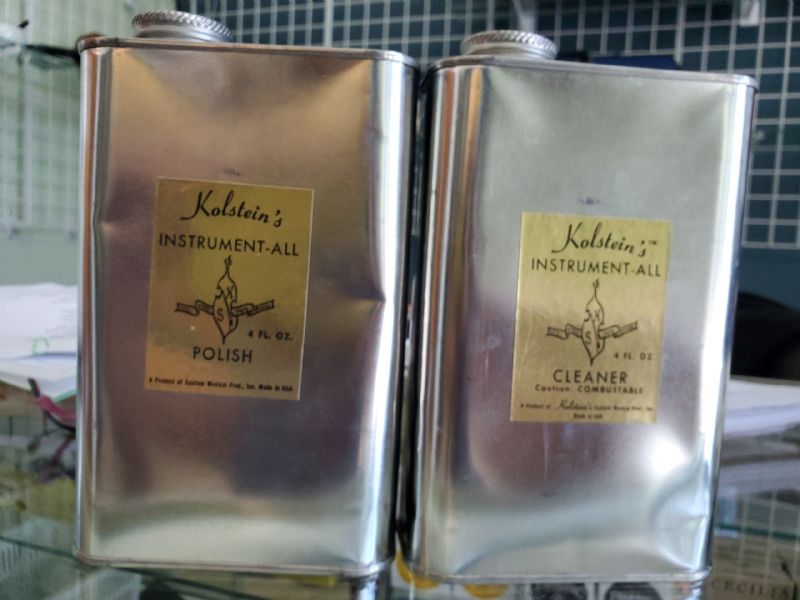
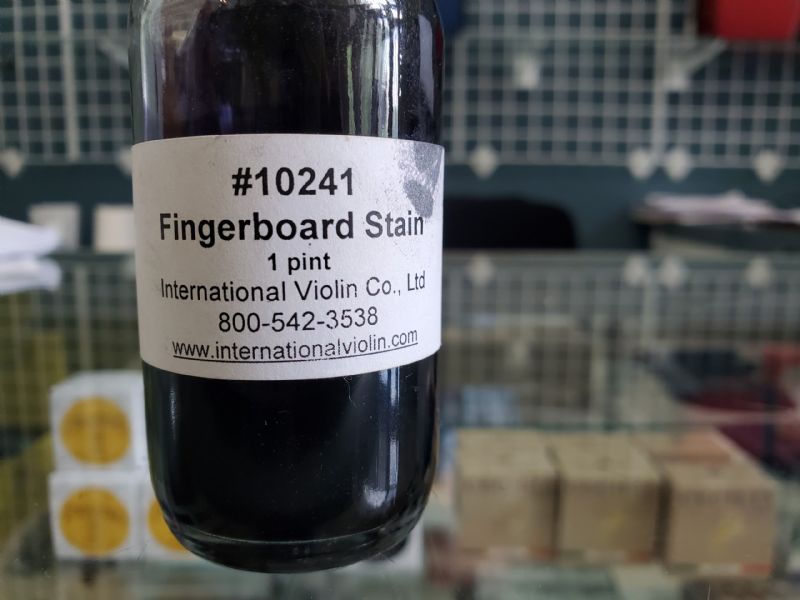
Notenut - Posted - 07/23/2022: 13:54:40
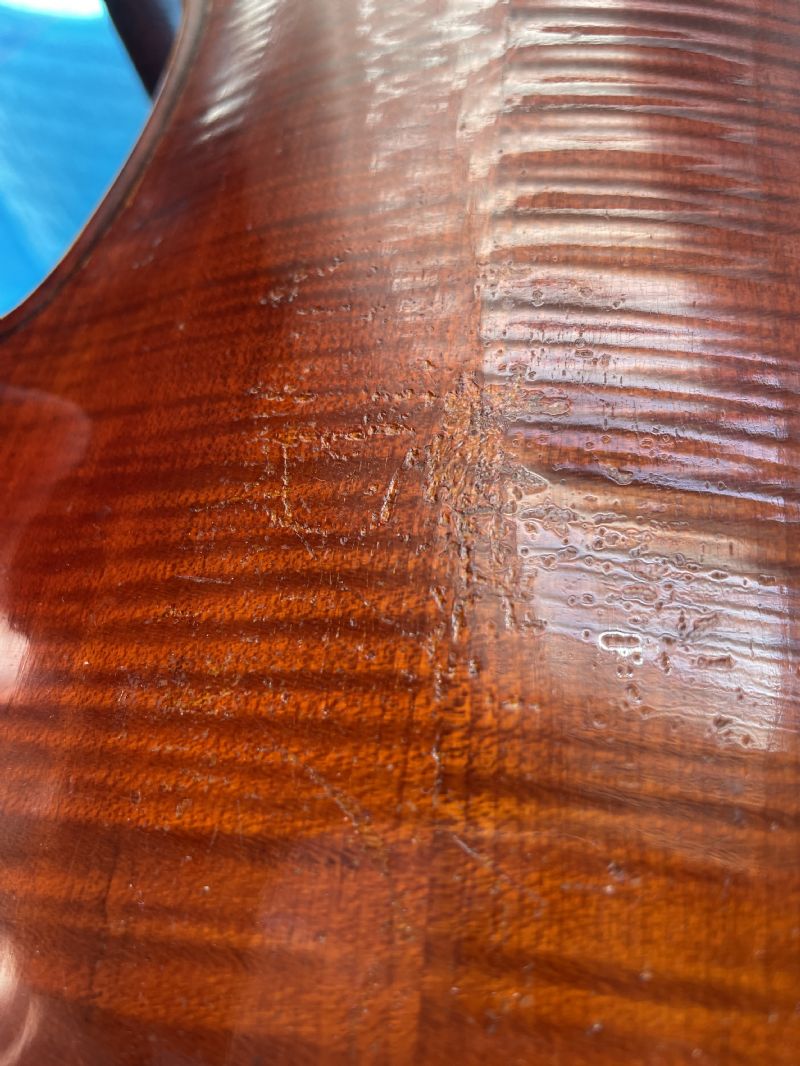
Here are some closeups of the finish on the fiddle. You can even see a miniscus around the areas where there were scratches that went to bare wood.
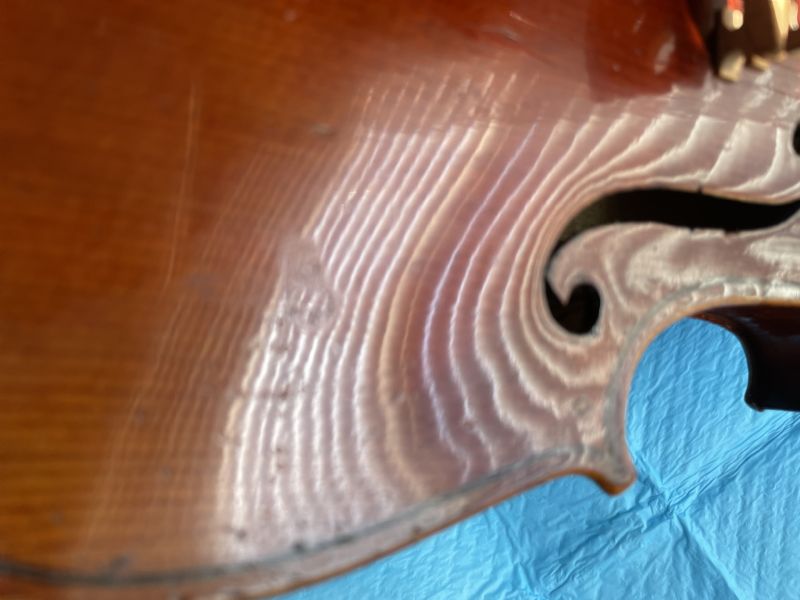
KCFiddles - Posted - 07/23/2022: 16:26:34
I don't know what you mean by a meniscus, which is a crescent. As far as I can tell, they cleaned the fiddle and applied a little wax, which will come off in time, and dyed the fingerboard, which is a lot more durable. They didn't add any other color, just increased the transparency of the surface of the varnish; didn't remove any scratches. Wetting the with wax made them less visible, like a lick and a pat or a rub with pecan meat or furniture wax does with furniture. IMO the "figure" in the fingerboard and the dirt and old rosin are what you are most angry about. The figure in the fingerboard would truly have been a misunderstanding: figure in a fingerboard is not considered a "plus" by anybody because it usually leads to warpage and instability. They probably thought they were doing you a service.
I don't like unexpected changes, either, and it can take me some time to get used to them. But for the life of me I can't see that you have much to complain about, apart from dying the fingerboard. I think they did an outstanding job of cleaning, and believe me, it's a lot of work, and not something that you can do halfway if you take on the job. It's either do it right, or turn the job away, if you care about your reputation. I put up those other old fiddles as examples so you can see some of the choices we deal with in restoring old fiddles. Honestly, I think yours came out pretty good, and I don't know anything about this shop. I'm just judging by what I see in the pics. Personally, I don't often dye fingerboards, and I don't apply any coatings, but that's what a "violin shop" has to do to keep their customers happy. You don't have to agree with my opinion, but it's based from experience, and a lot of your objections will diminish with time and use.
gapbob - Posted - 07/23/2022: 18:27:22
I was thinking about a situation where Gramps had an old model T, with the body rusted and dented, the engine rusted and running terribly.
Would you object to restoring his Model T, so that it had no rust, no dents, and a good running engine, transmission, no rips in the upholstery, etc?
My opinion isn't worth much to you, I reckon, but I think you would honor your Grandpa better by fixing up his car.
Notenut - Posted - 07/23/2022: 18:29:18
Thank you for your opinion KCFiddles, but as stated above I did not want a restoration, and I dont have 80 years for it to get back like it was, so if anyone can help with the original question:
Is there a way to reverse what RSV did to the body and fingerboard?
1) how to remove the dye from the fingerboard
2) how to remove the "polish" from the body
Thanks
The Violin Beautiful - Posted - 07/23/2022: 20:11:10
quote:
Originally posted by NotenutThank you for your opinion KCFiddles, but as stated above I did not want a restoration, and I dont have 80 years for it to get back like it was, so if anyone can help with the original question:
Is there a way to reverse what RSV did to the body and fingerboard?
1) how to remove the dye from the fingerboard
2) how to remove the "polish" from the body
Thanks
Restoration and repair are different things. A repair is done to correct damage and return the instrument to working order. A restoration is a process of returning the instrument to its original condition, something that requires a painstaking amount of care and consideration and can easily run into tens of thousands of dollars in cost.
Since you haven't said exactly what caused you to bring the violin into the shop, it's hard to tell exactly what all was done. From the pictures I can see that the violin was cleaned and polished. It looks like the spots on the back you mention were French polished and some varnish built up around the depressions. You mention touchup being done where scratches had revealed bare wood. If there was indeed bare wood, it was crucial to address that, because exposed wood can easily become contaminated and weakened. It's considered common practice in many shops to check a violin for scratches like that and touch them up before returning it to the customer. In fact, if a customer looks at it later and notices a scratch that was already there but hadn't caught their attention, there's a good chance they'll bring it back demanding to know why you 1) scratched their violin and 2) didn't fix it. One of the top shops in the country documents every instrument and bow that come I be o their shops with eight pictures every time. That way they can track everything that is going on with them, and on more than one occasion it's ended a customer dispute. Nothing hits home quite like pulling up years of photos showing a nick that's been there but hasn't registered to the customer.
All that being said, in answer to your latest questions, yes, the fingerboard dye can probably be removed and the shiny finish can be toned down. Most dyes don't penetrate too deeply, so planing the board will take it off if a solvent doesn't. If you want to reduce the glare of the varnish, either just play it a lot or take it to a shop and ask if it can be made less shiny. If you're really committed to removing the new material that's been added, there are shops that can do this by using carefully controlled solvents that require a chemical hood and working with a Q tip for hours, but be ready to spend hundreds, if not thousands, and it may never really look the same in the end.
I understand wanting to keep the instrument looking the way that's familiar to you, yet there are some things that are harmful to the instrument, so preserving them and not the instrument itself will only lead to heartbreak. I see nothing ruined. I have seen some horrifying cases where the work done on an instrument did real harm, but in your pictures I see a violin that's in good order. In fact, I can see plenty of old marks that have been left in tact in your pictures.
Edited by - The Violin Beautiful on 07/23/2022 20:15:06
TPJ54 - Posted - 07/23/2022: 20:11:30
I say that fiddle looks pretty good, the old scars, fading, stains all meant something though.
TimeTension - Posted - 07/25/2022: 00:59:58
Unless I missed it, you haven't mentioned how your instrument sounds after the shop worked on it.
When I want to make an instrument look like it hasn't been touched, played, or cared for for 80 years, I use a mixture 1 part diatomatious earth, 2 parts horse manure (I usually try to get Arabian), and 1 part cow manure, fairly fresh so as to add moisture and allow easy mixing. Use more cow manure if the mixture is too dry. I cover the f holes to protect the insides and proceed to apply a heavy coat to the exterior. Before this is dry, I wrap the instrument in a good quality used burlap and store it away for a few months. If doing this for a client instead of just getting one of my Larks ready to list on eBay, I will charge for storage also. This process works wonders for me as I don't like to use traditional methods of distressing. I also remember to back my strings off a full step as the moisture can cause some movement in the top.
Use with care, to each his own. By the way, this amalgamation is not patented.
FiddleDoug - Posted - 07/25/2022: 05:45:42
You approved the "cleaned and polished" before they did it? What did you think that meant? Color change? The didn't change the color, they removed 80 years of crud that was covering the original color. There's no good way to replace the crud.
You can take a Scotchbrite pad to it to "unpolish" it, but it should be used judiciously, and not over used. I can't guarantee results.
KCFiddles - Posted - 07/25/2022: 09:25:37
In theory, I like the manure method, since it's traditional for "antiques", but I've never tried it on fiddles before. Scotchbrite leaves tracks and doesn't look good at all, IMHO. Gentle abrasive blasting with corncobs, or fine walnut shell will take a shine off.
fiddler135 - Posted - 09/02/2022: 03:54:08
Try lighter fluid on a clean rag. (A small spot at the back of the scroll to start with).
The Violin Beautiful - Posted - 09/02/2022: 10:55:25
quote:
Originally posted by fiddler135Try lighter fluid on a clean rag. (A small spot at the back of the scroll to start with).
There are some pretty toxic chemicals in lighter fluid. I wouldn't recommend it, especially when there are some pretty simple alternatives.
farmerjones - Posted - 09/02/2022: 11:15:37
Just my opinion, I don't think it looks bad. I've knocked the shine down on a few with fine steel wool.
On the other end of the spectrum are the new fiddles with distressed finish. I had one for about two months. It may have sang like an angel. I don't remember. All I remember is it did my head. I hated that fake fiddle. I know I ain't supposed to hate. But I hated looking at that fiddle.
DougD - Posted - 09/02/2022: 14:06:31
Lighter fluid is naphtha, one of the lighter petroleum distillates, a little faster evaporating than "mineral spirits." The bottle I have (Scripto brand) is also labelled "universal solvent." No petroleum distillates are particularly good for you, especially in enclosed spaces, but there's nothing nefarious in lighter fluid.
All of this is beside the point. The OP was complaining that a luthier had cleaned the dirt and grime (which he mistakenly referred to as "patina") from his instrument, and he wanted to put it back, not clean it further.
Edited by - DougD on 09/02/2022 14:13:34
fiddler135 - Posted - 09/02/2022: 19:43:43
quote:
Originally posted by DougDLighter fluid is naphtha, one of the lighter petroleum distillates, a little faster evaporating than "mineral spirits." The bottle I have (Scripto brand) is also labelled "universal solvent." No petroleum distillates are particularly good for you, especially in enclosed spaces, but there's nothing nefarious in lighter fluid.
All of this is beside the point. The OP was complaining that a luthier had cleaned the dirt and grime (which he mistakenly referred to as "patina") from his instrument, and he wanted to put it back, not clean it further.
The "before" pictures show a fiddle with the upper most cells of wood very dry. Lighter fluid will remove the oils that were put on the instrument, that made it shiny. The oils will evaporate on their own given enough time. Lighter fluid speeds up the process. I can't think of a more volatile solvent for oils.
The Violin Beautiful - Posted - 09/03/2022: 05:33:23
Naphtha is one common ingredient. So is butane. Both are not good to get on skin or to inhale. It would probably take a significant exposure to cause bodily harm, but it’s still worth considering the danger of the chemicals before using them. Both are significant carcinogens and naphtha has been shown as a cause of cataracts and blindness.
Edited by - The Violin Beautiful on 09/03/2022 05:36:02
fiddler135 - Posted - 09/03/2022: 09:47:07
quote:
Originally posted by fiddler135quote:
Originally posted by DougDLighter fluid is naphtha, one of the lighter petroleum distillates, a little faster evaporating than "mineral spirits." The bottle I have (Scripto brand) is also labelled "universal solvent." No petroleum distillates are particularly good for you, especially in enclosed spaces, but there's nothing nefarious in lighter fluid.
All of this is beside the point. The OP was complaining that a luthier had cleaned the dirt and grime (which he mistakenly referred to as "patina") from his instrument, and he wanted to put it back, not clean it further.The "before" pictures show a fiddle with the upper most cells of wood very dry. Lighter fluid will remove the oils that were put on the instrument, that made it shiny. The oils will evaporate on their own given enough time. Lighter fluid speeds up the process. I can't think of a more volatile solvent for oils.
In addition; I imagine that this fiddle was spirit varnished, and therefore its colors were dissolved in alcohol. (It looks very much like one of my fiddles.) However, you may find that there was a chemical change (upon drying) so that the colors will now dissolve in lighter fluid. So be careful. Don't put the solvent on the body until you know it won't remove the color.
Edited by - fiddler135 on 09/03/2022 09:49:36
fiddler135 - Posted - 09/03/2022: 09:55:00
quote:
Originally posted by fiddler135quote:
Originally posted by DougDLighter fluid is naphtha, one of the lighter petroleum distillates, a little faster evaporating than "mineral spirits." The bottle I have (Scripto brand) is also labelled "universal solvent." No petroleum distillates are particularly good for you, especially in enclosed spaces, but there's nothing nefarious in lighter fluid.
All of this is beside the point. The OP was complaining that a luthier had cleaned the dirt and grime (which he mistakenly referred to as "patina") from his instrument, and he wanted to put it back, not clean it further.The "before" pictures show a fiddle with the upper most cells of its wood very dry. Lighter fluid will remove the oils that were put on the instrument, that made it shiny, and (hopefully) put the fiddle back the way it was, which is the goal. The oils will evaporate on their own given enough time. Lighter fluid speeds up the process.
The Violin Beautiful - Posted - 09/03/2022: 11:03:29
quote:
Originally posted by fiddler135quote:
Originally posted by fiddler135quote:
Originally posted by DougDLighter fluid is naphtha, one of the lighter petroleum distillates, a little faster evaporating than "mineral spirits." The bottle I have (Scripto brand) is also labelled "universal solvent." No petroleum distillates are particularly good for you, especially in enclosed spaces, but there's nothing nefarious in lighter fluid.
All of this is beside the point. The OP was complaining that a luthier had cleaned the dirt and grime (which he mistakenly referred to as "patina") from his instrument, and he wanted to put it back, not clean it further.The "before" pictures show a fiddle with the upper most cells of its wood very dry. Lighter fluid will remove the oils that were put on the instrument, that made it shiny, and (hopefully) put the fiddle back the way it was, which is the goal. The oils will evaporate on their own given enough time. Lighter fluid speeds up the process.
If the violin was French polished, the shininess comes from the resin that's been applied, not from an oil. It sounds like you expect the lighter fluid to strip off what's been applied, but you're assuming it's just an oil polish. Clearly, varnish has been added. Oil only serves as a carrier in French polishing, so when it's done well, there is no oily residue once the varnish has dried. If too much oil is used, the varnish turns cloudy in an hour or two.
The lighter fluid idea is one of those old "home remedies" that pop up from time to time, like using cork to clean strings. Just like using cork, it's a bad idea that can have disastrous results. Petroleum distillates will seep into any exposed wood and contaminate it, causing irreparable damage. This is why so many of the cleaning products available are not good to use. I've seen too many violins that have become gummy from the polishes and cleaners to which they've unfortunately been subjected.
East Texas Fiddle - Posted - 09/04/2022: 18:51:10
If this were my fiddle, I would be angry.
I totally understand your frustration.
Terms of Use | Privacy Policy | Privacy Consent (EU/GDPR Only)
Copyright 2026 Fiddle Hangout. All Rights Reserved.