


Hi. Newbee here needing advice. I recently had a good local luthier place new medium helicore strings on an older fiddle. The string choice was mine based not on my experience, but on reviews. They have been played on for about one week now. The sound is just very loud and harsh, much more so than the previous (unknown name) strings. I am looking for recommendation for a good, more mellow sounding string. I am mainly a porch player. Thank you

Well, each fiddle and each pair of ears will have a perfect string, at a given level of playing. As you grow into fiddling your tastes may change. Fiber core strings are mellower than metal core strings. I use Thomastic Dominant strings on my Roth Guarneri copy. The pursuit of the perfect string can take a significant fiscal investment on your part. Let those Helicore mediums stay on your fiddle a couple of months. If you are still dissatisfied withthem as they will mellow some. Then change to a fiber core string. Metal core strings are often used byplayers that like to playing different tunings as they will put up with that better. Enjoy the process and play on. R/

You'll probably want to go with a synthetic-core string. Thomastik Dominants are pretty much the standard, but a bit pricy at $75+/set. Some lower cost options are Pirastro Tonica or maybe D'Addario Pro-Arte at maybe $40 or so. Any steel string will likely be even louder and harsher than the Helicores.
If you really want to go cheap, there is a lower priced synthetic from D'Addario (don't remember the name) or the Fiddlerman synthetic. I think both are around $25-30.
yes if you like the smoother mellower sound, I agree that Dominants will help with that. There are so many brands of strings, all have their own characteristics…
Here;s a chart to start with…String characteristics chart
You'll see the Dominants in the middle, as a 'neutral' type of string.
Many fiddlers do use the Helicore steel strings though. I hear that the steel strings take better to cross-tuning and changes in tuning?
Edited by - NCnotes on 10/11/2026 19:07:03
I’ve hesitated to respond based on the recent bot problem. Hopefully this is not another iteration.
Helicore is a steel set, so like all steel core violin strings, the sound is harsh and edgy under the ear (although not necessarily at a distance) and lacking in color. The thing that sets Helicore apart from other steel sets is that the core is made from several strands of steel instead of a single strand. This makes the string feel deceptively rubbery like a completely worn-out synthetic string under the finger (I believe this is why some players prefer the heavy strings to the medium). But despite that rubbery feel, the strings are at high tension like other steel sets. This can really choke the sound out of a violin, not to mention the harm it can do to the instrument and its setup over time. Helicores are the only strings that feel worn out already when you first take them out of the package.
If you want warmth and color, the choice is really between gut and synthetic core. Ever since the adoption of perlon in Dominants, that set has been the violin industry and playing world standard by which everything else is measured. Dominants are the most dominant string globally and they are often considered to be in the middle of the sound spectrum (not too bright, not too dark). However, they are at the lower end of the string tension spectrum, making them much more friendly to instruments especially over time. In the last 30 years or so, there has been an increasing trend toward a more booming sound with a sharper edge to it, so newer sets have been made at higher tension or using new synthetic materials (allegedly PEEK is the secret ingredient). You really can’t go wrong with Dominants on any violin, but if you want to try alternatives, Pirastro made a set to ride on the wave of success of Dominants (Tonica), and while they’re not quite as good as Dominants, they come close for a lower price. Warchal makes a set called Amber that’s fairly similar. If you want to go darker, Pirastro’s Obligato set is the warmest synthetic set you can find. They are quite pleasant but they are rather weak if you play in a larger ensemble or are hoping to be heard well in a large room or a concert hall.
Gut is the oldest form of string, and you can still find options from various suppliers. Because the majority of the playing world has made a permanent switch to synthetic core strings, the market is much smaller and the resources are fewer and much more boutique. You can find unwound pure gut or wound gut from various places. If you buy from one of the top string makers you can select from a larger assortment of gauges to make a custom set based on your preferences. Gut is very warm and pleasant, and it has a huge array of color that is hard to replicate. The bow response is drastically different from modern strings, though; with modern sets there is more of a focus on designing strings that allow ham-fisted players to dig in without squawking as much to attempt to wring tone out of a fiddle like water out of a dish towel. Gut strings fight back if the bow is pushed, and they either make unpleasant noises or stay silent. Playing on them may be an awakening of sorts for players. As baroque music has come back into the fold more players have been experimenting with gut. The downside is that gut is the least pitch-stable option and typically has the shortest playing life. It’s much more sensitive to humidity and temperature swings, so it’s fussier to work with and you have to retune much more frequently. If you can’t stand tuning, they are not the strings for you. The wound options tend to last a little longer but still have the same pitch stability issues. That being said, gut was used for centuries by everyone from the beginning player to the soloist and in every environment possible with little temperature and humidity control, so it’s certainly not an insurmountable task to use them.
I had gut for awhile and instead of a light tuning once at the start, it meant tuning 2-4x during a 2hr period. They felt like strings that never settle! I loved the sound … but ugh, all that tuning did me in. All the cranking on the strings tended to make my bridge tilt too, so I was always having to right the bridge. WIth dominants I’ll usually be in tune when I take it out of case, and just tweak the E string.
I had obligatos for awhile and they were nice, but pricey! Not sure the sound was worth the extra cost over the dominants. So, dominants is where I am for now.
My violin/fiddle is very old (120yr+?) and I would hesitate to put high tension strings on, since it has a repaired crack already.
quote:
Originally posted by NCnotesI had gut for awhile and instead of a light tuning once at the start, it meant tuning 2-4x during a 2hr period. They felt like strings that never settle! I loved the sound … but ugh, all that tuning did me in. All the cranking on the strings tended to make my bridge tilt too, so I was always having to right the bridge. WIth dominants I’ll usually be in tune when I take it out of case, and just tweak the E string.
I had obligatos for awhile and they were nice, but pricey! Not sure the sound was worth the extra cost over the dominants. So, dominants is where I am for now.
My violin/fiddle is very old (120yr+?) and I would hesitate to put high tension strings on, since it has a repaired crack already.
There's an old joke that period instrument players spend half their time tuning and the other half playing out of tune.
Keep in mind that what is loud and harsh to a beginner is what many advanced players want in a fiddle...because experienced bowers can find the ranges of tone between low and dulcet to loud and harsh (expressive )...Helicores are popular with bluegrassers because they do have that edge readily available (and the range).
I disagree a little with the synthetic core string comments. Again, sometimes in a beginners hands, synthetics can be similarly loud and harsh or even more squeaky...because they are geared to classical players who are looking to access a clear, high sheen in tone
I'd suggest suggest trying a set of medium Jargar classics (steel core like Helicore). But they are a warmer, rounder tone right off the bat with hardly any break in time. And in the right hands big and warm as well. Seems they are less expensive than Helicores these days, too. That wasn't always the case. 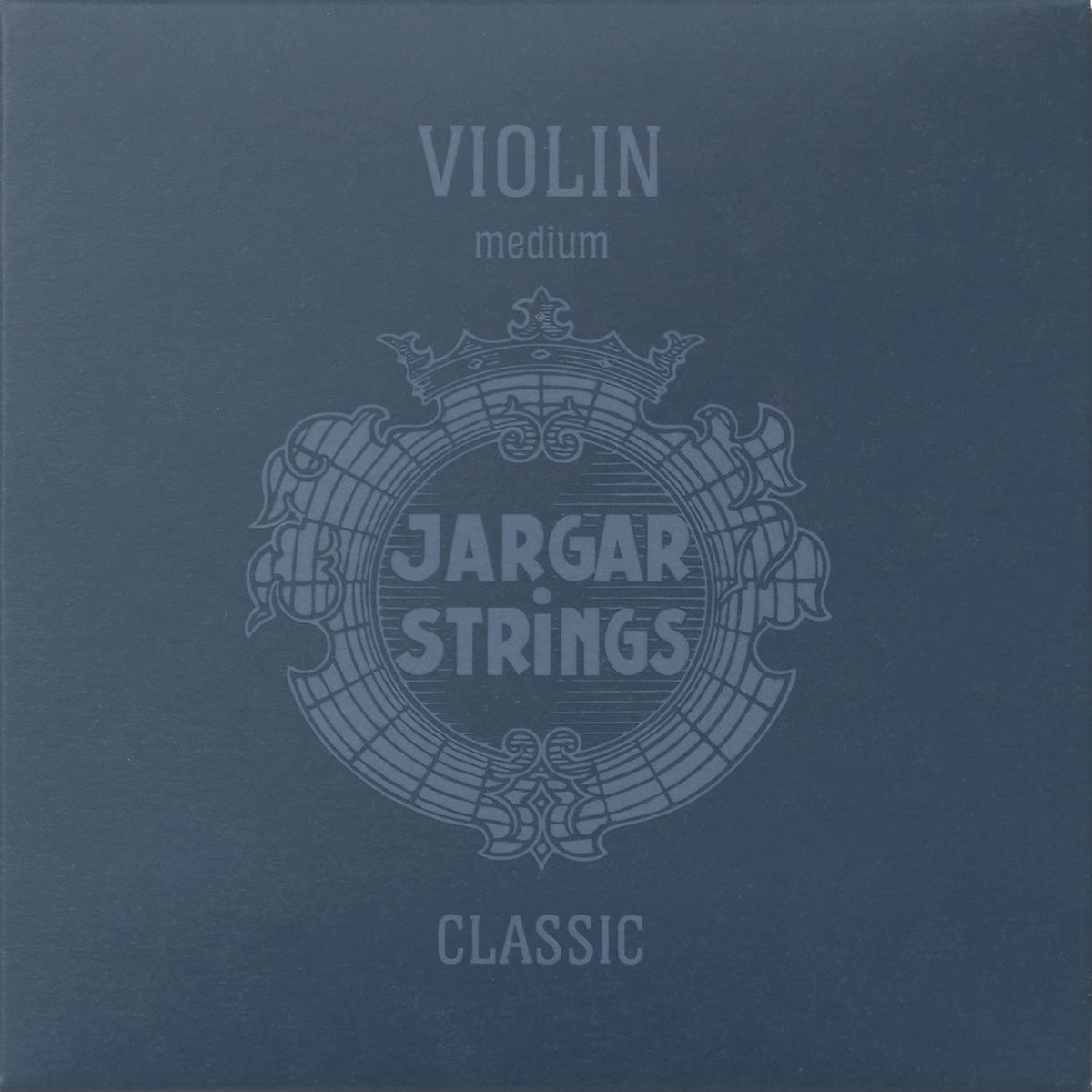
Edited by - ShawnCraver on 10/13/2026 05:56:08
yes, I’ve heard that fiddlers prefer the steel strings…
-cuts through the mix soundwise (are they louder?)
-can be crosstuned and stay more stable in pitch
-fast response, play fast
CLassical players usually use synthetic / gut, and Irish Trad players seem divided. I’ll have to start surveying people on what strings they have on, am curious now!
quote:
Originally posted by ShawnCraverKeep in mind that what is loud and harsh to a beginner is what many advanced players want in a fiddle...because experienced bowers can find the ranges of tone between low and dulcet to loud and harsh (expressive )...Helicores are popular with bluegrassers because they do have that edge readily available (and the range).
I disagree a little with the synthetic core string comments. Again, sometimes in a beginners hands, synthetics can be similarly loud and harsh or even more squeaky...because they are geared to classical players who are looking to access a clear, high sheen in tone
I'd suggest suggest trying a set of medium Jargar classics (steel core like Helicore). But they are a warmer, rounder tone right off the bat with hardly any break in time. And in the right hands big and warm as well. Seems they are less expensive than Helicores these days, too. That wasn't always the case.
I would say the opposite is true. Beginning and intermediate players often gravitate toward loud and harsh instruments because they haven't yet learned how to draw the tone out of an instrument. Truly advanced players tend to favor instruments that are not nearly so abrasive, many of them preferring much more chocolate in the tone than lemon juice. This is one of the reasons Guarneri violins have such a great reputation: plenty of power, but small and easy to get around and known for more darkness and the capacity to be leaned into more heavily.
The squawking problem is one of bow engagement. It can appear on any type of string if the player has not developed bow technique yet. But the squawking that happens on gut if a player usually plays with a heavy arm is a bit different in that the player can be very experienced in playing. The change to gut can be like hitting a brick wall at 100 mph for an unaccustomed player. Yes, the issue stems from technique, but it's specific to the type of string. With decent bow technique, a player shouldn't trouble on any synthetic or steel set. Gut is a different beast that requires a careful approach.
Describing strings as designed for classical players is a false dichotomy. All the sets in the current market were designed for classical players and adopted by fiddlers. Helicores are often touted as fiddler's strings, but they weren't designed specifically for that purpose. Even the most expensive set of strings on the market is designed simply for playing the violin--in any style you want.
Terms of Use | Privacy Policy | Privacy Consent (EU/GDPR Only)
Copyright 2026 Fiddle Hangout. All Rights Reserved.


