


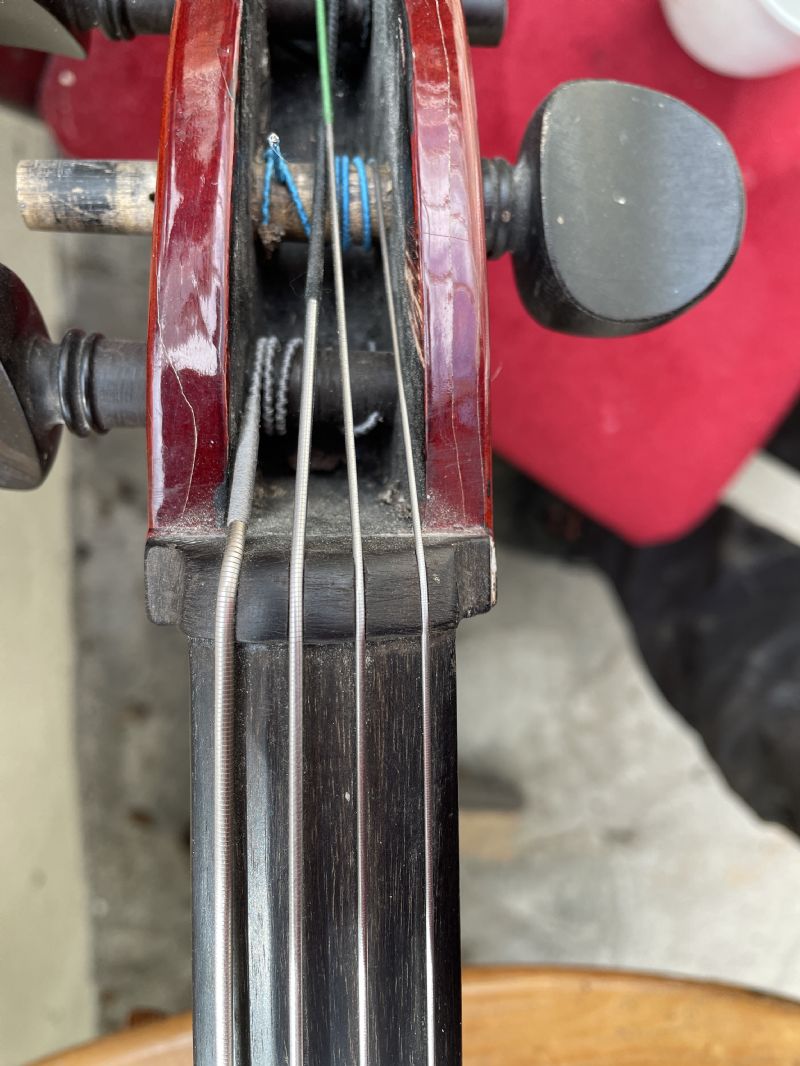
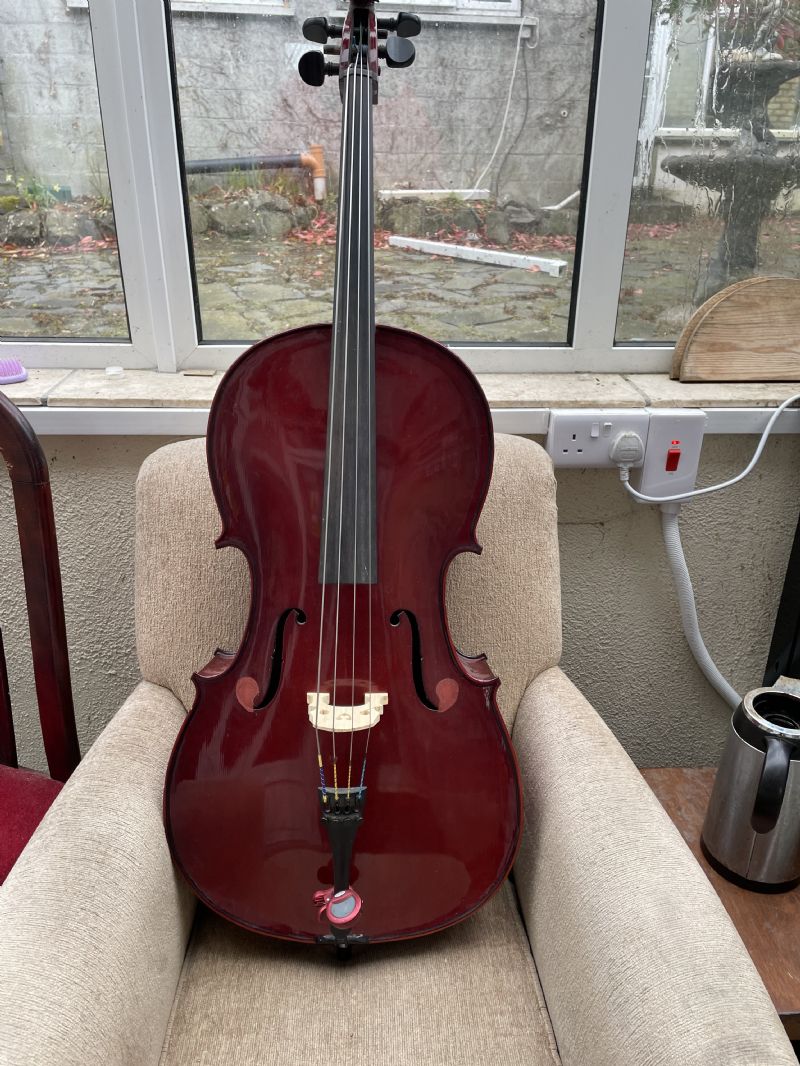
I have 4 old student cello’s lying around the place 2 full size and 2 half size. So I took a Stentor II (is that two or eleven) full size and bought a d,addario low F string for the NS design electric cello for it. Reading all the reviews on this string it comes up time and again that on an acoustic cello it is way too floppy so I hatched a plan!
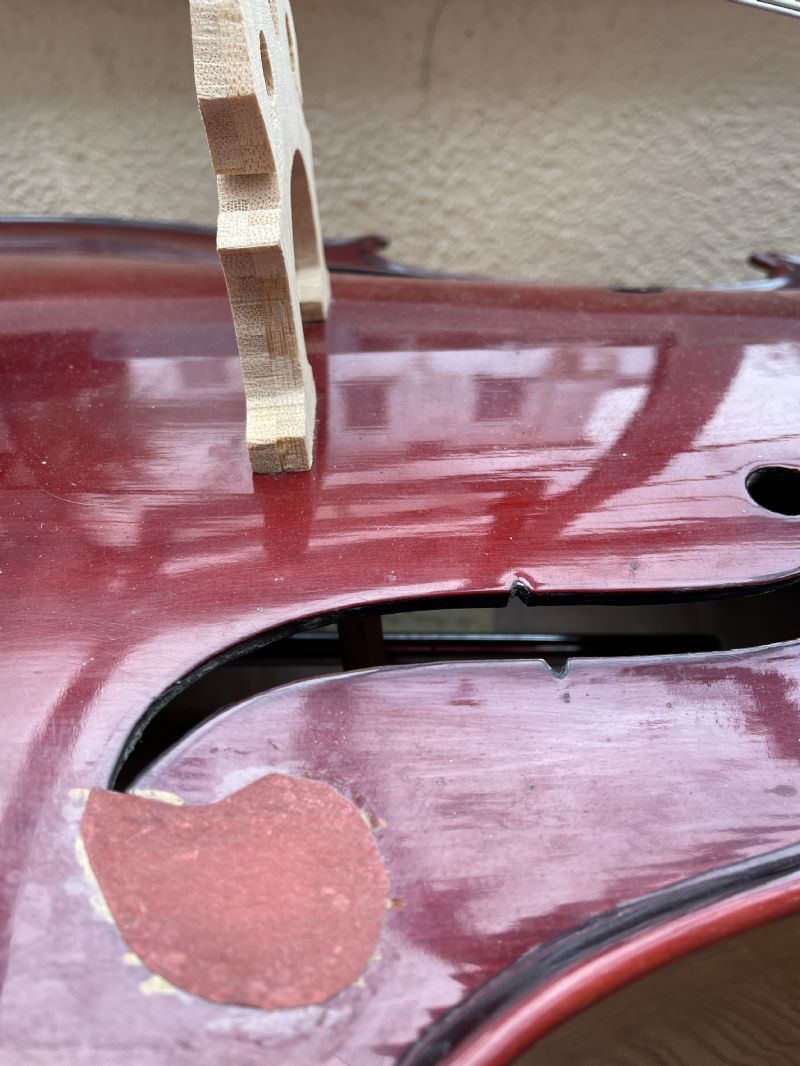
I moved the soundpost a little closer to the tailpiece and then shifted the bridge to the other side of the soundpost. Then I fitted it with a tailpiece from one of the half size cello’s, and of course I had to make a new taller bridge. The vibrating string length is now 2” longer than the standard. This makes the F string acceptable. I honestly thought it would be better but it still is quite good. I payed a little under €70 for the F from Thomman in Germany. For the other 3 slots (CGD) I bought a set of cheap and cheerful Chinese cello strings for €30 which are only available in medium strength.
The bridge is two pieces of bamboo glued together with the grain direction 90 degrees opposed as you can see in the photo. The idea of this is to maintain strength and take advantage of the vertical grain which transfers sound waves a lot more efficiently.
The results are very impressive. The F as mentioned is good and the other 3 are awesome when plucked. Soft tension Larsen’s are on my wishlist. Due in part to the short afterlenght below the bridge and the inferior strings the bowing performance is mediocre with the current set up.
Off to the pub for a play! Yippee!!!
The first thing is space. Sitting in tightly packed space this instrument is the ideal size. I’ve seen double bass players at sessions and they have to stand to play and they get relegated to the periphery. It’s hard to be objective when it comes to the sound and volume of an instrument like this because all the sound is projected forward away from the player. From what I can hear it sounds exactly like a a double bass and I can clearly hear the CD&A strings. The F not so clearly but I know it’s there. It is great fun to play. The tuning is a little funky to get used to, GDAE would be easier for me but I like to have the F available for now. Maybe when I get the lower tension strings I can shorten the vibrating length a little and tune it up higher. The really important thing is that everybody loves it and it is welcomed to the session (some people I rub shoulders with are fussy. Very fussy).
So it’s a winner if any of you want to give it a try
Edited by - martyjoe on 04/11/2026 07:33:16

This is such an interesting and very “hands-on musician” kind of experiment—really appreciate the level of curiosity behind it.
From my own experience playing violin since 2009, I find these kinds of acoustic tweaks fascinating because even small structural changes can completely shift how the instrument responds. It’s impressive that you’re not just experimenting, but actually observing how tension, scale length, and setup interact in practice.

Terms of Use | Privacy Policy | Privacy Consent (EU/GDPR Only)
Copyright 2026 Fiddle Hangout. All Rights Reserved.

