
DVD-quality lessons (including tabs/sheet music) available for immediate viewing on any device.
Take your playing to the next level with the help of a local or online fiddle teacher.
Monthly newsletter includes free lessons, favorite member content, fiddle news and more.
Premier Sponsors


|
Please note this is an archived topic, so it is locked and unable to be replied to. You may, however, start a new topic and refer to this topic with a link: http://www.fiddlehangout.com/archive/58037
Saltcured - Posted - 06/19/2023: 07:27:04
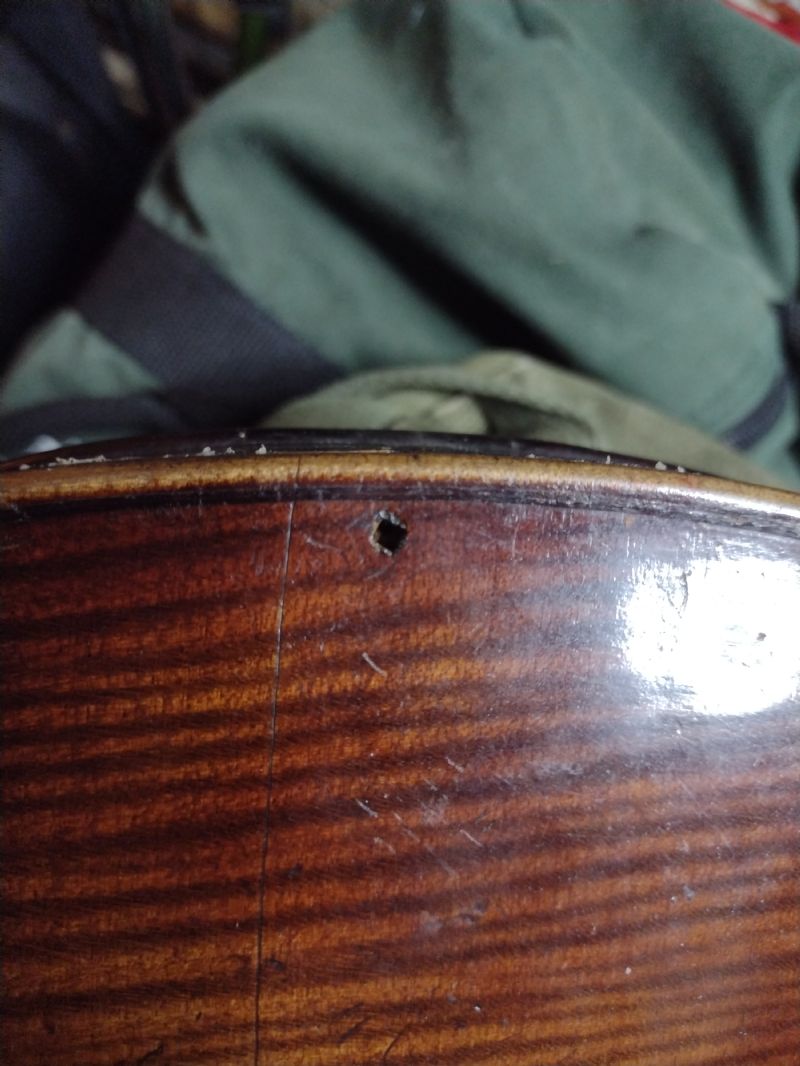
What's with this small round hole? My other fiddle is without one.
Edited by - Saltcured on 06/19/2023 07:27:51
GeorgeH - Posted - 06/19/2023: 10:34:48
There may have been a wooden "pin" in there that fell out.
Some makers use ebony pins to hold the plates to the blocks during construction, and some makers add pins (or fake pins) to look like they used them when making the violins. And repair persons sometimes add pins during repairs.
You may want to have that hole filled with a new pin rather than leaving it open.
The Violin Beautiful - Posted - 06/19/2023: 11:11:46
quote:
Originally posted by Moncho2What's with this small round hole? My other fiddle is without one.
It's a hole for a pin. In the old Cremonese school of making, locating pins were used at the top and bottom block so that the rib structure could be attached to the top and back before they were cut out and the outline of the rib structure could be traced without it sliding out of position. After the plates were finished, the pins would be put in to fill the holes.
Makers in other regions saw these pins and would often install their own pins after finishing instruments (their methods of construction did not involve locating pins, and they didn't necessarily understand their purpose) to give them an "Italian look." Some dealers would install pins as well to try to fool people. Pins of this kind are commonly referred to as "aftermarket pins."
Pins have been used sometimes to register the top in the intended position with the top and bottom blocks so that the top won't slide when it's glued on. It's a common feature on commercial German violins.
If you look closely at the picture or your violin, you'll notice the hole is not round but square. It would be a good idea to have it filled in, but it's critical that anything that is put in the hole not be fitted tightly. Square pins are the worst kind, as they encourage cracks from their corners. Round pins can cause problems as well if not fitted properly.
Terms of Use | Privacy Policy | Privacy Consent (EU/GDPR Only)
Copyright 2026 Fiddle Hangout. All Rights Reserved.


